
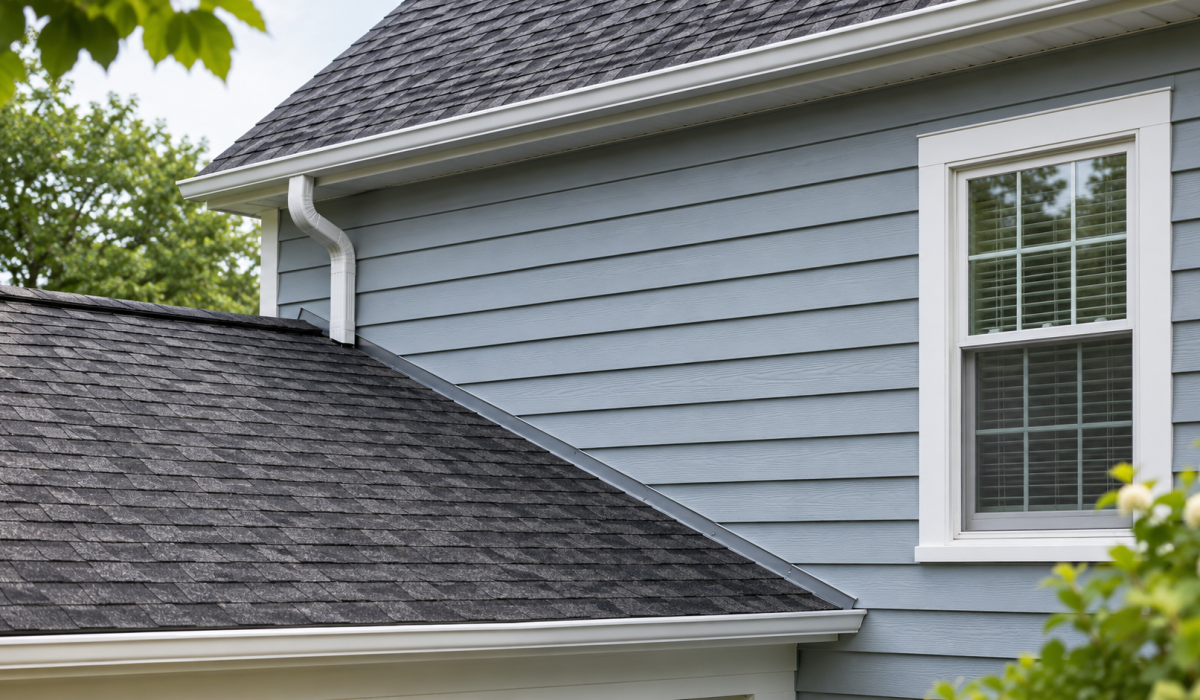
Deciding whether to replace roof or siding first starts with the condition of both systems and the places where they connect. When both need replacement, completing major roofing work before the final siding installation can be a practical plan: it keeps the new wall finish out of the roof tear-off phase. This planning recommendation depends on the site’s access and protection needs.
Some wall areas may need to be opened before roofing work so the contractor can inspect damage and complete flashing details. The appropriate sequence can therefore involve several coordinated stages across both projects.
For homeowners in Arlington and Northern Virginia, the goal is a written plan that addresses existing problems, connects the roofing and siding correctly, and protects completed work. Here is what to discuss before setting installation dates.
Replace Roof or Siding First? Start With the Project Conditions
Use these scenarios to discuss whether you should replace roof or siding first. Ask the contractor to explain which situation best matches the inspection findings.
| Project condition | Planning approach to discuss |
|---|---|
| The roof has an active problem, while siding work is mainly cosmetic | Address the water-entry problem and necessary protection before scheduling cosmetic improvements. |
| Damage is suspected behind siding at a roof-to-wall connection | Plan access, inspection, and repairs at that junction before closing it with finished materials. |
| Both systems need replacement | Coordinate demolition, repairs, flashing, roofing, and final siding installation in one sequence. |
| The roof is serviceable, but siding needs replacement | Evaluate a siding project that protects the existing roof and preserves or upgrades the shared connections. |
| The projects will happen months apart | Complete a weather-protected, properly detailed first phase and document the work required for the later phase. |
7 Helpful Planning Tips Before You Choose the Order
1. Identify the Problem Each Project Needs to Solve
Before deciding to replace roof or siding first, ask for an assessment of both areas. Share photographs of stains, leak locations, damaged materials, and previous repairs. Explain when you noticed the problem and whether it changes during rain.
Ask the contractor to distinguish the immediate repair need from the broader replacement plan. Useful questions include:
- Which conditions need attention now?
- What findings support repair or replacement of each system?
- Is the concern in the roof covering, the wall, or their connection?
- What temporary protection is needed before permanent work starts?
Have the findings documented so your decision to replace roof or siding first follows the condition of the home. A discussion of roofing services in Northern Virginia can help establish the roofing portion of that scope.
2. Map the Roof-to-Wall Connections
Pay particular attention to porch roofs, dormers, lower garage roofs, and additions that meet taller walls. Flashing at these junctions needs to connect with the roof covering and the wall’s drainage layer, often called the weather-resistive barrier or house wrap. The layers must direct water outward and downward.
Access to that connection can influence whether you replace roof or siding first. Ask which siding sections need removal and who will restore them. Temporary removal around a junction may be part of the roof project without requiring replacement of every wall surface.
GAF’s guidance on reusing metal flashing recommends replacement whenever possible, while allowing reuse in some circumstances. Evaluation includes condition, expected service life, removal damage, and compatibility with the new shingles. Flashing that is the wrong size for the replacement shingles must be changed.
Ask for the proposed treatment of each connection in the estimate.
3. Allow for Concealed Roof and Wall Repairs
The initial inspection may leave questions that require opening the assembly. Before you agree to replace roof or siding first, establish how the contractor will document concealed conditions and request approval for additional work.
The Building America Solution Center’s existing-home flashing guide calls for inspection of the wall and roof framing and repair of damaged materials when the junction is opened.
Your agreement should explain who assesses exposed areas, what photographs you receive, and how additional repairs are priced. Ask which work must be completed or inspected before the area is covered.
If findings change the recommendation to replace roof or siding first, request an updated sequence before the next crew proceeds.
4. Coordinate Fascia, Soffits, Gutters, and Trim
The decision to replace roof or siding first should include the surrounding components. List what will remain, what will be replaced, and what needs temporary removal or reinstallation.
Ask how the plan addresses roof-edge metal, fascia boards, soffit panels, corner trim, gutter attachments, and downspouts. If the siding assembly or trim dimensions change, ask whether that affects nearby flashing or attachments.
Manufacturer details also matter at the finished junction. LP Building Solutions explains that specified gaps above flashing allow moisture to escape and should not be closed or caulked where its detail requires them to remain open. Use the instructions for the actual siding product selected.
Include any needed gutter inspection and repair in the scope so the finished drainage path is addressed.
5. Protect the Surfaces Installed First
Whether you replace roof or siding first, agree on how the next crew will protect the completed work. Ask each crew to explain its access routes, equipment placement, material storage, and debris handling.
GAF’s homeowner preparation guidance recommends identifying vulnerable exterior areas, arranging delivery and debris-container locations, protecting exterior features, and documenting conditions before roofing begins.
If roofing follows new siding, agree on how that siding, its trim, and nearby windows will be protected during tear-off. If siding follows a new roof, ask how workers will access upper walls and protect roof areas beneath the work.
Request a plan appropriate to the installed materials. Discuss ladders, scaffolding, dropped fasteners, cutting debris, and where tools or removed materials may be placed. Record responsibility for inspecting completed surfaces before and after the next phase.
6. Plan the Time Between Crews
Scheduling can affect whether it makes sense to replace roof or siding first. Confirm material availability, crew dates, anticipated openings in the exterior, and the plan if weather interrupts work.
Ask who maintains temporary protection while an area remains unfinished and who checks it before the next crew arrives. Identify one person responsible for communicating changes to the schedule.
If the projects will be separated by months, ask how the first project will be completed without depending on an unfinished connection to the later work. Discuss whether the second phase will require reopening a junction, removing trim, or repeating equipment setup.
That information helps you compare the scope of a combined project with separate phases when deciding to replace roof or siding first.
7. Put Responsibilities and Completion Checks in Writing
Once you decide whether to replace roof or siding first, make the sequence part of the proposal. The Building America Solution Center specifically calls for coordination between roofing and siding or house-wrap installers and for the relevant work to be assigned in the contract.
The written plan should identify responsibility for:
- Removing and restoring siding needed for roofing access.
- Roof decking, wall sheathing, and other approved repairs.
- Flashing and its connection to the wall’s weather barrier.
- Fascia, soffits, gutters, trim, and related finish work.
- Temporary protection and communication between crews.
- Applicable permits, inspections, final photographs, and cleanup.
Request photographs of concealed connections before they are covered, followed by a review of the completed exterior. Keep the scope, change approvals, product information, and written warranty terms together.
What Can a Coordinated Work Sequence Look Like?
Discussing whether to replace roof or siding first becomes easier when the contractor describes the actual stages. For a project involving both systems, an example planning sequence is:
- Inspect the roof, walls, and shared connections; confirm the scope.
- Arrange protection and open the wall areas needed for access.
- Inspect exposed materials and complete approved repairs.
- Coordinate roofing, flashing, and wall-barrier work in the required order.
- Complete siding, trim, and related drainage work while protecting finished roofing.
- Review the connections, cleanup, photographs, and project records.
This example illustrates coordinated work; the contractor should adapt it to your materials, damage findings, access, and required inspections. Ask for any planned departures to be explained before construction starts.
Frequently Asked Questions
Is there a universal rule about whether to replace roof or siding first?
No single sequence fits every project. The appropriate order depends on condition, access, and the connections being rebuilt. DOE/PNNL describes roof-wall flashing upgrades as work that can accompany roof replacement, an exterior-wall upgrade, or a separate retrofit.
Can a roof be replaced without replacing all the siding?
It may be possible. Ask which siding areas must be opened for flashing access and how those areas will be restored. Have the contractor document the flashing that will remain or be replaced.
Can siding be replaced while keeping an existing roof?
It may be possible when the roofing and planned connection details are suitable. Ask how the siding contractor will protect the roof and coordinate any work affecting flashing. Discuss residential siding options alongside the inspection findings.
Does completing both projects together guarantee savings?
No. When deciding whether to replace roof or siding first, request itemized proposals for both a coordinated project and separate phases. Compare setup, protection, repairs, and any repeated access work.
Can separate contractors agree on whether to replace roof or siding first?
Yes, with clearly assigned responsibilities and agreed checkpoints. Identify who handles the shared flashing details, who authorizes closing the wall, and who communicates changes. One lead contact can help keep both crews working from the same plan.
Should every visible gap near flashing be sealed?
No. Some details intentionally include drainage clearances. Have the contractor follow the selected siding and flashing instructions; filling a required drainage gap can interfere with the way that detail releases water.
Plan Your Roof and Siding Project With Insured Roofs
If you are deciding whether to replace roof or siding first, start with an assessment of both systems and their shared details. Bring photographs of concerns and tell the contractor whether you want one coordinated project or work completed in separate phases.
Insured Roofs provides roofing, siding, gutter, and inspection services in Northern Virginia. To discuss your project, request a roof inspection in Arlington or call (703) 828-7462. Ask for a recommendation that explains the sequence, flashing work, and protection of completed surfaces.