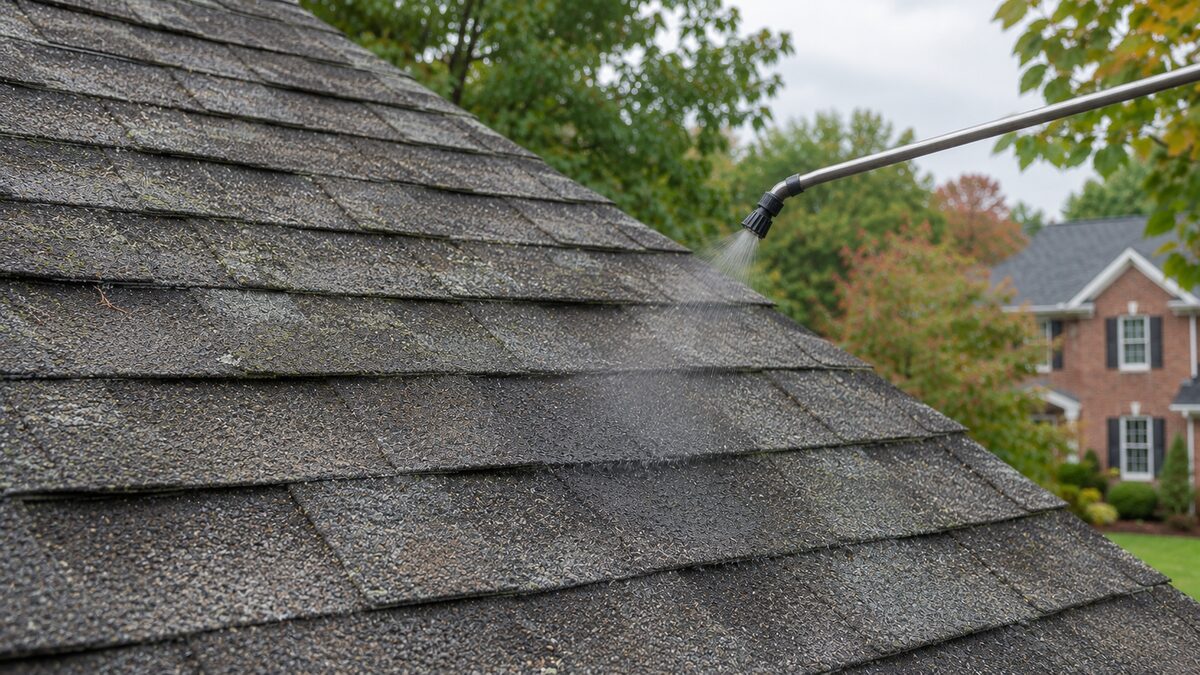
Roof rejuvenation sprays are marketed for aging asphalt shingles, but claims about lasting through rain, summer heat, and winter weather need evidence for the exact treatment and roofing material. A short drying time or an immediate change in flexibility does not, by itself, establish years of roof performance.
Virginia has a humid climate with very warm summers and moderately cold winters, with substantial differences between regions. Those conditions make the type and duration of weather exposure relevant when reviewing treatment claims.
For homeowners in Arlington and Northern Virginia, the starting point is the roof’s condition and its manufacturer’s guidance. The following five helpful weather checks explain what to request before deciding whether roof rejuvenation sprays belong in your maintenance plans.
1. Confirm the Product, Roof Condition, and Manufacturer’s Position
Ask for the treatment’s complete product name, technical information, and application instructions. Have the provider explain whether it is intended to penetrate the shingles or form a surface coating. Products described as rejuvenators, coatings, and sealers should be evaluated according to their actual formulation and intended use.
The Asphalt Roofing Manufacturers Association’s guidance on coatings and rejuvenators strongly advises against applying these field treatments over installed asphalt shingles. ARMA also recommends checking whether the specific shingle manufacturer accepts the proposed treatment.
GAF, for example, states that it does not recommend restorative field treatments and has not evaluated those products for use on its asphalt shingles. That is a reason to obtain manufacturer guidance before proceeding, rather than relying on the treatment provider’s description alone.
Establish What Your Roof Actually Needs
Request an inspection record that identifies the shingles where possible, describes their condition, and documents areas needing attention. Useful questions include:
- Which conditions is the proposed treatment intended to address?
- Are there damaged or missing shingles, flashing concerns, or signs of leakage?
- What repairs would be recommended independently of the treatment?
- Does the testing involve shingles similar in type, age, and condition to mine?
If there is an existing leak or visible damage, start with a professional roof repair assessment. Claims about roof rejuvenation sprays should be considered alongside the findings from your own roof.
2. Separate Application Instructions From Rainfall Durability
Ask two different questions about roof rejuvenation sprays: When can the treated roof be exposed to rain, and what evidence shows how it performs after repeated rainfall?
The first question concerns application conditions. Request written instructions explaining the required roof condition, any drying or absorption period, and the necessary rain-free interval. Ask how the provider checks the forecast and what happens if rain arrives before the stated interval has passed.
Do not assume one waiting period applies to every product. Have the provider identify the instructions for the exact formulation being offered.
Ask What Happens After Repeated Wetting
For durability claims, request information showing what was measured after repeated water exposure. Ask:
- Were treated and comparable untreated shingles evaluated?
- How many wetting and drying cycles were included?
- Were measurements taken immediately after application or after weather exposure?
- Did the reported benefit remain measurable afterward?
Match the evidence to the claim. A result about retained flexibility answers a different question from whether a roof assembly prevents water entry. A demonstration of water beading also does not, by itself, establish added service life.
3. Review Summer Heat and Sunlight Testing
When evaluating roof rejuvenation sprays for summer conditions, ask what testing included sunlight or ultraviolet exposure, elevated temperatures, and moisture.
NIST research on asphalt-shingle weathering examines UV radiation and combinations of temperature and humidity, including changes to mechanical properties and adhesive-strip chemistry. This research helps identify relevant exposure conditions, but it is not a trial establishing the effectiveness of a rejuvenation spray.
Request Measured Results After Exposure
Ask for the report’s test method, exposure duration, temperatures, sample description, and comparison results. Have the provider explain the practical meaning of any percentage improvement.
For example, if the claim concerns flexibility, ask when flexibility was measured and whether the result remained after heat and UV exposure. If the claim concerns granule retention, request the measurement behind that statement.
Also ask about possible adverse effects. Owens Corning’s current technical bulletin identifies blistering, curling, and excessive asphalt softening as potential risks from applying materials with unknown chemistries to its shingles. It also identifies possible effects on fire classification. These are manufacturer cautions, not a finding that every treatment produces each outcome.
A useful assessment of roof rejuvenation sprays considers both the claimed improvement and any effect on other shingle properties.
4. Examine Cold-Weather and Temperature-Cycle Claims
A minimum application temperature tells you about the conditions specified for applying a product. It does not establish how treated shingles will perform through subsequent winters.
Ask whether the evidence for roof rejuvenation sprays addresses cold flexibility, repeated temperature changes, or freezing and thawing after moisture exposure. These describe different conditions. A sample bent at one temperature does not demonstrate its performance through repeated seasonal exposure.
NIST identifies thermal cycling and freeze-thaw events among the weathering conditions asphalt shingles can encounter during service. That supports asking what exposures a treatment study actually included, rather than assuming that “weather tested” covers them all.
Keep the Questions Specific
Request the lowest test temperature, the number of cycles, whether the samples were wet or dry, and when the final measurements were taken. Ask how closely the tested shingles resemble the ones on your roof.
For application planning, have the provider explain whether any temperature limit refers to the air, roof surface, or product. The written instructions should guide that discussion. Avoid substituting a general rule for the requirements of the proposed treatment.
5. Check Field Results, Service-Life Claims, and Warranty Terms
Laboratory testing can help compare materials, but claims that roof rejuvenation sprays add a fixed number of years deserve closer examination.
Ask how any laboratory exposure was connected to actual outdoor performance. ASTM G151 cautions against simply converting accelerated test hours into months or years outdoors. A supported relationship requires adequate material-specific laboratory and outdoor data. Conditions and deterioration patterns also matter.
If a provider describes a test as equivalent to several years, request the basis for that conversion. Then ask for dated field observations from comparable roofs, including climate, shingle age, follow-up duration, and any repeat treatments.
Review the Full Evidence Package
| Information to Request | What It Helps You Evaluate |
|---|---|
| Complete test report | The method, samples, measured properties, and limitations. |
| Laboratory and sponsor names | Who performed and commissioned the work. |
| Comparable untreated samples | Whether the comparison supports the claimed benefit. |
| Dated field follow-up | What was observed on roofs over the stated period. |
| Reapplication requirements | Whether reported performance depends on additional treatments. |
| Written warranty and remedy | What the provider promises to do if the covered condition occurs. |
Commissioned testing can still provide useful information. Examine the methods and limits, and distinguish a laboratory’s measured results from broader advertising claims.
Clarify Both Warranties
Review the treatment warranty separately from the original shingle warranty. Ask what is covered, what is excluded, who handles a complaint, and whether the remedy is another application, a refund, or specified repair work.
GAF’s bulletin on treating aged asphalt shingles states that its limited warranties remain in effect, while damage resulting from the treatment is excluded. That statement should not be interpreted as approval of the treatment. Obtain the guidance and warranty terms applicable to your own shingles.
Frequently Asked Questions About Roof Rejuvenation Sprays
How Soon Can It Rain After a Roof Treatment?
Use the written instructions for the exact product. Ask the provider to identify the required rain-free interval and explain the response if weather changes during that period. A drying-time statement addresses application planning; it does not establish long-term weather durability.
Does a Five-Year Warranty Prove Five Additional Years of Roof Life?
No. A warranty describes the provider’s obligations under specified terms. Evidence of additional service life requires support for that separate claim. Review the actual remedy and the observations or testing behind the advertised duration.
Will Roof Rejuvenation Sprays Void My Shingle Warranty?
Do not assume every manufacturer has the same position. Request written guidance for your shingle product and the warranty applicable to its installation. GAF, for example, distinguishes continued warranty coverage from excluded treatment-related damage.
Are Roof Rejuvenation Sprays a Substitute for Roof Repair?
A treatment proposal should not replace diagnosis of an existing roofing problem. Missing shingles, flashing defects, and active leaks need their own assessment and repair scope. A claim about improved flexibility does not establish that those conditions have been resolved.
Get a Clear Roof Assessment Before Choosing a Treatment
Before purchasing roof rejuvenation sprays, request the inspection findings, current manufacturer guidance, weather-exposure evidence, and written warranty. If a provider cannot substantiate a particular claim, treat that benefit as unverified when comparing your options.
Insured Roofs provides inspections, repairs, and asphalt roofing services for homeowners in Arlington and Northern Virginia. To understand your roof’s condition and discuss appropriate next steps, schedule a roof inspection in Arlington or call (703) 828-7462.