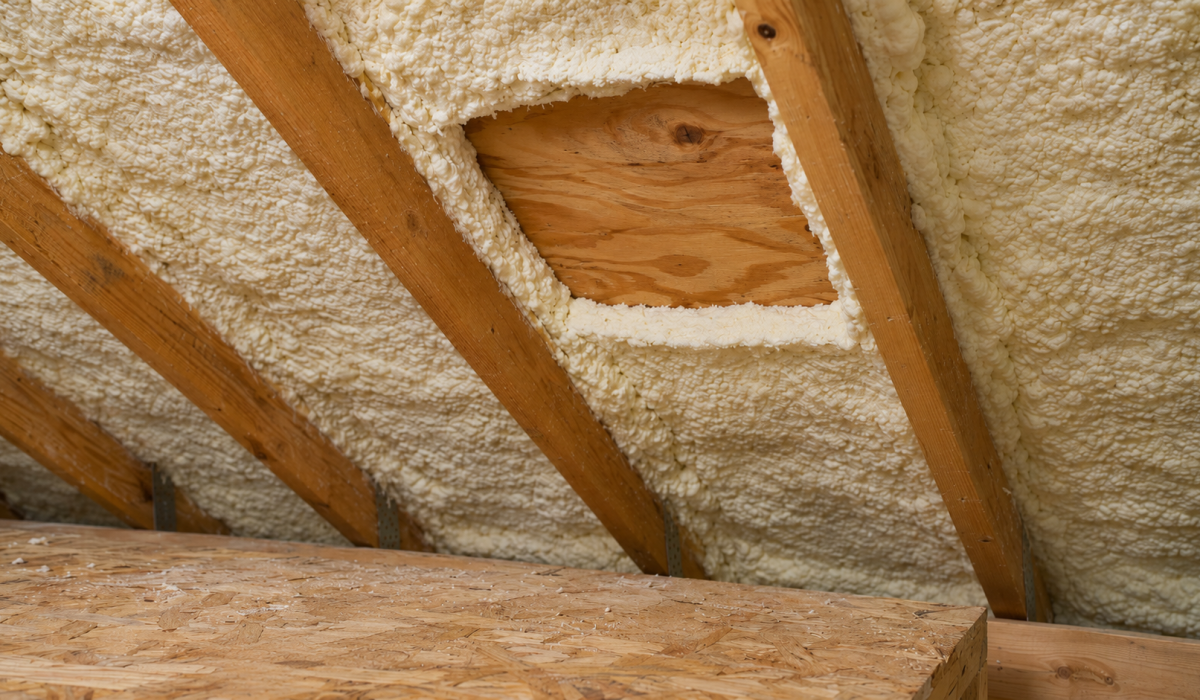
Roof replacement with spray foam beneath the decking calls for a plan to assess wood that may be hidden from the attic. Contractors can inspect exposed decking from above during tear-off, take appropriate moisture readings, and arrange targeted openings where important areas remain concealed. The inspection method should match the access available and the question being investigated.
Roof decking, also called sheathing, is the structural surface beneath the roofing materials. When foam covers its underside, the visible insulation surface cannot show the condition of all the wood behind it.
For homeowners in Arlington and Northern Virginia, these six helpful planning tips explain what to ask before scheduling roof replacement with spray foam underneath.
1. Document the Existing Roof and Foam Assembly
Before scheduling roof replacement with spray foam, gather the insulation invoice, product information, installation date, photographs, and records of previous leaks or repairs. Ask the contractor to identify what is known and what still needs verification.
Useful details include whether the decking is plywood, oriented strand board (OSB), or boards; whether foam contacts the wood directly; and which areas are accessible from inside. Record any coverings that conceal the foam itself.
Identify the Foam Without Guessing
Have the insulation professional confirm the product and whether it is open-cell or closed-cell foam. These materials differ in stiffness and removal characteristics, so that distinction matters when planning access and repairs. Removal guidance from the American Chemistry Council (ACC) describes different considerations for the two types.
Also ask how the attic or roof assembly was designed to manage moisture. Below-deck spray foam guidance from Pacific Northwest National Laboratory (PNNL) emphasizes water control, correcting roof deficiencies, and appropriate attic moisture management.
An early discussion about roof replacement with spray foam should establish the existing conditions before proposing changes to insulation or ventilation.
2. Plan to Inspect Exposed Decking During Tear-Off
During a roof replacement with spray foam, removing shingles and removable underlayment can expose the decking’s upper face. Ask when that inspection will happen and who will document the findings before new materials cover the wood.
Some areas may remain obscured by adhered membranes or other retained materials. Have the contractor explain how those areas will be assessed and record any remaining limits on visibility.
Evaluate Physical Condition Alongside Moisture
Ask for photographs of suspicious areas, with notes about their location and condition. The review should consider deterioration, damaged panels, and other defects that affect the decking’s ability to support the roofing system. GAF explains that decking replacement depends on its condition and that replacing the roof does not automatically require replacing all the decking.
Moisture testing and checking the wood’s soundness answer different questions. General wood-inspection guidance from the Federal Highway Administration explains that a moisture measurement does not directly establish whether decay is present. A low reading therefore should not be used alone to clear visibly deteriorated wood for reuse.
For roof replacement with spray foam, request an explanation connecting the observed condition to the recommendation for each affected area.
3. Ask How Moisture Readings Will Be Taken and Interpreted
A moisture assessment for roof replacement with spray foam should identify the material tested, the instrument used, and the locations of the readings. A number without that context is difficult to evaluate.
Pin meters use electrodes that contact the wood. Insulated probes can help investigate moisture at selected depths. Pinless meters scan a sensing area, and their readings can be affected by surface moisture and measurement conditions. Follow the meter manufacturer’s instructions for the material and situation.
Make Sure the Measurement Relates to the Wood
During roof replacement with spray foam, ask how the method assesses the decking itself. A reading taken against insulation should not be described as the wood’s moisture content unless the method actually measures the wood appropriately.
Manufactured panels also need suitable interpretation. USDA Forest Products Laboratory research found that a calibration suitable for the solid lumber tested did not directly provide accurate moisture results for the plywood samples in that study.
Ask the contractor to record:
- The panel type and exact test location.
- The meter, settings, and relevant corrections.
- The measurement depth or sensing method.
- Recent weather and visible surface wetness.
- Comparison readings and any planned follow-up.
A single spot reading describes a limited location at a particular time. Ask why the selected test areas provide useful information about your roof and which areas remain unassessed.
4. Investigate Concealed Areas When Findings Need Confirmation
A professional planning roof replacement with spray foam may recommend selected openings where accessible surfaces do not answer the question. In a study supported by the U.S. Department of Energy, Building Science Corporation investigators removed foam samples to expose roof sheathing and take moisture readings. This research illustrates how targeted access can support an assessment of concealed wood.
Before openings are made, ask what each one is intended to reveal, where it will be located, and what findings would justify expanding the investigation. Include the repair of inspection openings in the agreed scope.
Understand What Thermal Imaging Can Show
Thermal imaging may help identify areas for closer examination, but it detects temperature patterns. FLIR’s moisture-detection guidance explains that similar patterns can have causes other than moisture and should be checked with moisture measurements.
For roof replacement with spray foam, a thermal image should not be treated as a view through the insulation or a complete assessment of the concealed decking. Ask what follow-up supports the interpretation.
If the findings remain inconsistent, ask whether a building-envelope specialist or structural professional is needed before the repair scope is finalized.
5. Coordinate Decking Repairs With the Insulation Work
Foam attached beneath a panel can complicate access and removal. ACC guidance notes that spray foam generally adheres to its substrate, may leave a residual layer when removed, and can require techniques that also affect the underlying surface. The practical implication is to plan the decking and affected insulation work together.
For roof replacement with spray foam, establish who will handle the wood repairs, foam removal where needed, and restoration of the insulation system.
Separate the Findings From the Repair Decision
Ask what evidence supports replacing a panel, retaining it after appropriate drying, or investigating further. Confirm how the moisture source will be addressed through roof repairs or other necessary work.
Before new foam is applied, the responsible contractor should verify that the substrate meets the product’s requirements. PNNL’s below-deck spray foam guidance calls for checking sheathing moisture before covering it with insulation.
Restore the Insulation Disturbed During Roof Replacement With Spray Foam
Inspection openings can interrupt insulation and air sealing. ACC’s sampling guidance addresses repairing those openings and planning restoration when protective thermal or ignition barriers must be disturbed. The repair method should follow the applicable product guidance and assembly requirements.
Ask: “Who will restore the insulation, air seal, and any required protective covering, and how will completion be documented?”
6. Put the Scope, Costs, and Weather Plan in Writing
A proposal for roof replacement with spray foam should explain how the team will handle discoveries once the roof is opened.
Request these details before work begins:
| Planning Item | What to Clarify |
|---|---|
| Inspection access | Areas to inspect before and during tear-off, plus known limitations. |
| Findings | Photographs, test locations, readings, and the basis for recommendations. |
| Decking repairs | Material specifications, quantities, labor, and how additional work is priced. |
| Insulation work | Removal and restoration responsibilities, access needs, and separate costs. |
| Additional authorization | How revised work and schedule changes will be presented for approval. |
| Temporary protection | Who protects exposed areas if inspection or repairs extend the schedule. |
If the proposal includes a decking allowance, ask whether it also covers removal and restoration of foam attached beneath those panels. Clear roofing and insulation scopes help you compare quotes for roof replacement with spray foam.
PNNL’s reroofing guidance identifies the period between removing old roofing and establishing new water protection as particularly vulnerable to moisture entry. Build weather protection into the sequence, including any wait for an insulation specialist or further assessment.
Agree on a review point before affected areas are concealed again. Request records showing what was inspected, what was repaired, and what remains outside the inspection’s scope.
Frequently Asked Questions About Roof Replacement With Spray Foam
Can the Decking Be Checked Without Removing All the Foam?
Often, useful information can come from exposed decking during tear-off and selected inspection locations. Whether additional foam removal is necessary depends on access, the findings, and the repairs required. Ask for the reason and proposed extent of any removal.
Does a Dry Moisture Reading Mean the Wood Is Safe to Reuse?
Not by itself. The reading must be considered alongside the decking’s physical condition, the measurement method, and the project’s requirements. It does not establish structural soundness or rule out damage from earlier wetting.
What Moisture Percentage Is Acceptable Before Work Continues?
For roof replacement with spray foam, ask for the acceptance criteria applicable to the decking, roofing materials, and any replacement insulation. The contractor should explain the relevant manufacturer requirements and how the readings were interpreted. One percentage should not be presented as a universal test for both dryness and wood condition.
Who Restores Insulation During Roof Replacement With Spray Foam?
Confirm this in the written scope. Ask whether the roofing contractor will coordinate an insulation professional or whether you need a separate agreement. Include inspection openings, affected insulation, air sealing, and any required protective coverings in that discussion.
Plan Your Roof Replacement With Spray Foam Before Tear-Off
The most useful preparation is a clear assessment and repair plan: how the wood will be accessed, what testing can establish, how hidden findings will be documented, and who will restore the affected materials.
Insured Roofs provides roof inspections, repairs, and asphalt roofing services for homeowners in Arlington and Northern Virginia. When requesting an inspection, mention that spray foam is attached beneath the decking and share any available installation or leak records.
Schedule a roof inspection in Arlington or call (703) 828-7462 to discuss your roof’s condition and replacement planning.