What Are Roof Scuppers and How Do They Prevent Drainage Problems?
Water is one of the biggest threats to the long-term performance of any roofing system. While sloped roofs naturally direct rainwater toward gutters, flat and low-slope roofs require carefully designed drainage systems to prevent standing water, leaks, and structural deterioration.
One important component of these systems is the roof scupper.
Understanding how roof scupper drainage works can help homeowners, commercial property owners, and building managers identify potential problems before they develop into expensive repairs.
In Arlington, Virginia, and surrounding Northern Virginia communities, heavy rainfall, seasonal storms, and accumulated debris can place additional demands on roof drainage systems.
At Insured Roofs, we believe that understanding how your roof manages water is an important part of protecting your property.
This guide explains what roof scuppers are, how they work, why they matter, and seven essential maintenance tips to help prevent drainage problems.
What Is a Roof Scupper?
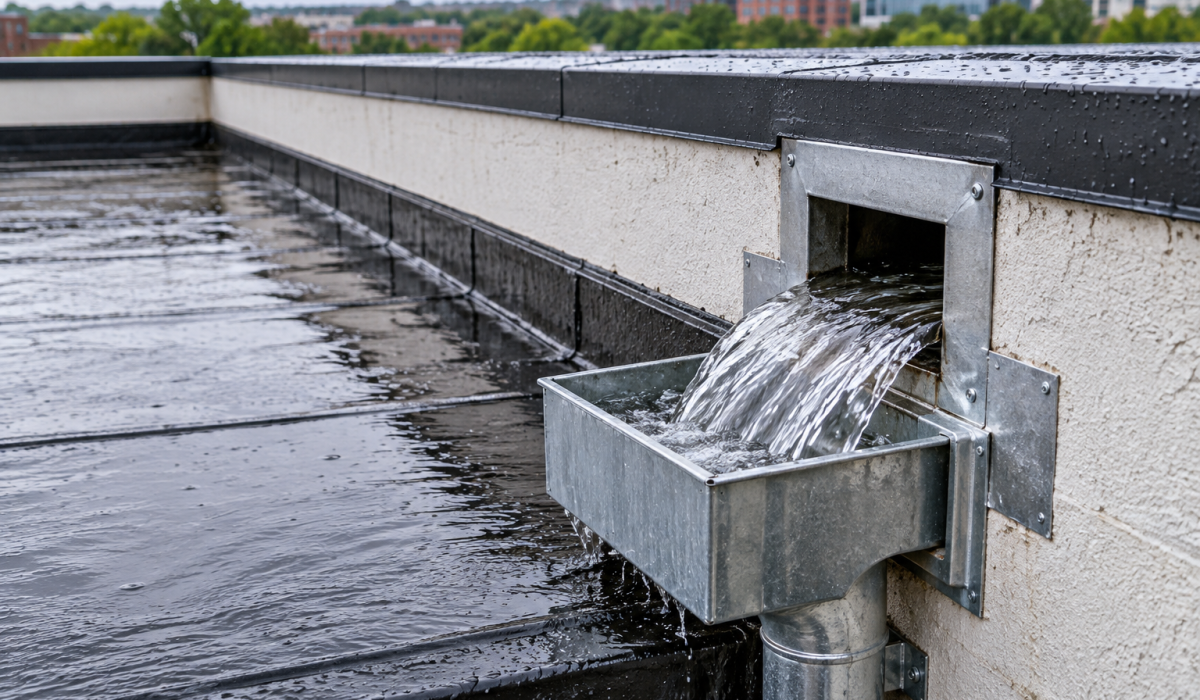
A roof scupper is an opening installed through a parapet wall or at the edge of a roof to allow accumulated rainwater to drain away from the roofing surface.
Scuppers are commonly found on flat roofs, low-slope roofing systems, commercial buildings, and residential properties with modern architectural designs.
Unlike traditional gutters that collect water along sloped roof edges, a roof scupper provides a designated exit point for water moving across the roof surface.
A typical roof scupper drainage system may include:
- Scupper opening: The outlet that allows water to leave the roof.
- Flashing: Waterproofing material protecting the connection between the scupper and roofing membrane.
- Conductor head: A collection box that may receive rainwater from the outlet.
- Downspout: A vertical pipe directing water toward an appropriate discharge location.
- Drainage slope: The designed roof slope guiding rainwater toward drainage outlets.
When these components work together, they help prevent excessive water accumulation and reduce the risk of moisture-related damage.
How Does Roof Scupper Drainage Work?
The primary purpose of roof scupper drainage is to move rainwater away from a roof before it accumulates to potentially damaging levels.
Although flat roofs appear level, properly designed systems typically have a slight slope that encourages water to move toward designated drainage points.
1. Rainwater Collects on the Roof Surface
During rainfall, water lands on the roofing membrane and begins moving toward lower sections of the roof.
The direction of this movement depends on the building’s roof slope, structural design, and drainage layout.
2. Water Flows Toward the Scupper
As rainwater travels across the roof, it reaches an opening positioned along the roof perimeter or parapet wall.
A properly positioned scupper allows water to escape without unnecessary accumulation.
3. The Scupper Directs Water Away
Water passes through the scupper opening and exits the roofing area.
Depending on the building design, it may discharge through a conductor head, downspout, or another approved drainage arrangement.
4. Water Is Carried Toward a Safe Discharge Location
The drainage system directs water away from vulnerable building components.
Proper discharge helps reduce moisture exposure around exterior walls, foundations, entrances, and other sensitive areas.
An effective roof scupper drainage system depends on adequate slope, appropriate outlet sizing, reliable waterproofing, and routine maintenance.
Why Is Proper Roof Scupper Drainage Important?
A functioning drainage system does more than remove rainwater. It supports roof performance, protects building materials, and reduces the risk of unnecessary repairs.
Prevents Excessive Ponding Water
Ponding water occurs when rainwater remains on the roof surface instead of draining within the time expected for that roof’s design and conditions.
Persistent standing water may indicate inadequate slope, blocked outlets, or other roofing issues.
Excessive ponding can increase the load on a roof and accelerate the deterioration of certain roofing materials.
Proper drainage helps reduce these risks by providing a reliable pathway for rainwater.
Reduces the Risk of Roof Leaks
Water remaining on a roof for extended periods can expose vulnerable seams, penetrations, and flashing connections to prolonged moisture.
If these components are damaged or improperly installed, water may eventually enter the roofing assembly.
Effective drainage reduces unnecessary water accumulation, helping limit conditions that can contribute to leaks.
Protects Roofing Materials
Standing water can contribute to premature deterioration, particularly when roofing membranes already have damaged seams or compromised waterproofing.
Efficient drainage supports the long-term performance of compatible flat roofing systems.
Helps Protect the Building Structure
Water accumulation adds weight to a roof.
When drainage becomes inadequate, this additional load may create structural concerns, especially during prolonged or intense rainfall.
Properly designed primary and emergency drainage systems help manage this risk.
Reduces Exterior Water Damage
Poorly directed runoff can damage exterior finishes, contribute to soil erosion, and create moisture problems around building foundations.
Properly connected downspouts help guide water toward suitable discharge locations.
7 Essential Roof Scupper Drainage Tips to Prevent Leaks
Regular maintenance is one of the most effective ways to reduce flat roof drainage problems.
These seven roof scupper drainage tips can help property owners recognize potential issues and protect their roofing systems.
Tip 1: Inspect Scupper Openings Regularly
Roof scuppers should remain free of visible obstructions so rainwater can move through the drainage system.
Leaves, dirt, roofing debris, and small branches may collect around openings throughout the year.
Property owners should watch for debris accumulation and arrange professional cleaning when necessary.
Regular inspections help identify problems before water begins collecting on the roof.
Tip 2: Keep Drainage Pathways Clear
A clogged roof scupper can prevent water from leaving the roofing surface efficiently.
When drainage openings become obstructed, water may accumulate around parapet walls and vulnerable roofing connections.
Professional cleaning helps restore proper water movement.
For safety, property owners should avoid climbing onto roofs to remove debris themselves.
Tip 3: Check Scupper Flashing and Waterproofing
Flashing creates a watertight connection between the roofing membrane and the scupper assembly.
Over time, exposure to sunlight, temperature changes, and weather conditions may contribute to flashing deterioration.
Damaged flashing can create potential water entry points.
A roofing professional should inspect these connections and recommend repairs when necessary.
Tip 4: Watch for Standing Water
Persistent ponding water is an important warning sign of potential drainage problems.
Standing water may result from clogged outlets, inadequate slope, roof settlement, or other defects.
If water remains on the roof longer than expected, a professional should investigate the cause.
Not every ponding issue requires roof replacement, but repeated accumulation should not be ignored.
Tip 5: Inspect Downspouts and Conductor Heads
Even when a scupper opening is clear, the connected drainage components may develop restrictions.
Downspouts and conductor heads can become clogged with leaves, dirt, and debris.
Damaged or disconnected components may also direct water toward building surfaces instead of appropriate drainage locations.
Routine inspections help identify problems throughout the entire drainage pathway.
Tip 6: Schedule Inspections After Severe Weather
Heavy rainfall and strong winds can carry debris onto flat roofs.
Storm conditions may also damage roofing materials, flashing, and drainage components.
After severe weather, property owners should observe visible drainage conditions from a safe ground-level location.
If unusual water accumulation, overflow, or interior staining appears, arrange a professional inspection.
Never climb onto a roof after a storm.
Tip 7: Schedule Professional Roof Maintenance
Professional roof inspections can help identify drainage issues that may not be obvious from the ground.
A qualified roofing contractor may examine:
- Scupper openings
- Roofing membranes
- Flashing connections
- Parapet walls
- Conductor heads
- Downspouts
- Visible ponding areas
Regular roof scupper drainage maintenance can help identify clogged outlets, damaged waterproofing, and poor water flow before these conditions contribute to more extensive repairs.
For many properties, scheduling inspections at least twice annually is a reasonable starting point, with additional attention after severe storms.
Common Roof Scupper Drainage Problems
Even properly installed drainage systems may develop problems over time.
Understanding the most common issues helps property owners recognize when professional attention may be necessary.
Clogged Roof Scuppers
Leaves, twigs, dirt, and other debris can collect near drainage openings.
When these materials restrict water movement, rainwater may begin accumulating across the roofing surface.
Possible warning signs include standing water, unusual overflow, and visible debris around accessible drainage components.
Damaged Scupper Flashing
Flashing protects the connection between the drainage outlet and roofing membrane.
Cracked sealant, separated membrane edges, or damaged flashing may allow water to enter the roofing assembly.
Professional inspection is important because some flashing problems are difficult to identify without roof access.
Improper Scupper Placement
Scuppers must be positioned where the roof’s designed slope directs water.
If an outlet sits too high relative to the roof surface, water may remain trapped before reaching the opening.
Correcting this condition may require evaluating the roofing system’s drainage design.
Undersized Drainage Openings
A drainage outlet must be appropriately sized for the roof area, expected rainfall, and applicable design requirements.
Undersized outlets may not remove water quickly enough during heavy rainfall.
Professional drainage design considers rainfall intensity, roof geometry, outlet capacity, and applicable building codes.
Deteriorated Roofing Membranes
Damage to roofing membranes around drainage outlets may create water entry points.
A professional inspection can help determine whether localized repairs or more extensive roofing work is necessary.
Primary Scuppers vs. Emergency Overflow Scuppers
Not every roof scupper performs the same function.
Some outlets handle normal rainfall, while others provide secondary protection when the primary drainage system cannot remove water adequately.
Primary Roof Scuppers
Primary scuppers handle routine rainwater drainage.
They are usually positioned at designed drainage points and may connect to exterior downspouts or conductor heads.
These outlets should function during ordinary rainfall.
Emergency Overflow Scuppers
Emergency overflow scuppers provide an additional exit path when water rises above normal drainage levels.
They are particularly important on roofs surrounded by parapet walls, where excessive water accumulation can create serious concerns.
Overflow outlets may discharge visibly, alerting building occupants or maintenance personnel to possible primary drainage restrictions.
Emergency drainage must be designed and installed according to applicable building codes.
The International Code Council provides resources for reviewing relevant building code requirements, including provisions concerning roof drainage.
Important: Emergency overflow scuppers should never be intentionally blocked or treated as a substitute for repairing primary drainage problems.
Roof Scuppers vs. Internal Roof Drains: What’s the Difference?
Flat roofs may use perimeter scuppers, internal roof drains, or a combination of drainage methods.
The most appropriate solution depends on the building’s design and drainage requirements.
Roof Scuppers
Scuppers allow rainwater to leave through an opening at the roof perimeter or parapet wall.
They may be connected to conductor heads and exterior downspouts.
Their location can make some drainage conditions easier to observe from outside the building.
Internal Roof Drains
Internal drains collect water through designated outlets installed within the roofing surface.
Water then moves through drainage piping to an appropriate discharge location.
These systems are commonly used on larger commercial roofs.
Which Drainage System Is Better?
Neither system is automatically better for every building.
A roof scupper drainage system may be appropriate for certain smaller flat-roof areas or buildings with suitable perimeter drainage.
Internal drains may be preferred for larger roofs or configurations where perimeter drainage is less practical.
A qualified roofing professional and, when necessary, a design professional should evaluate the building’s layout, drainage requirements, and applicable codes.
Warning Signs Your Roof Scupper Needs Attention
Drainage problems often begin with relatively small warning signs.
Recognizing these conditions early may help prevent more extensive damage.
Standing Water After Rainfall
Water remaining on a roof longer than expected may indicate blocked drainage or inadequate slope.
Water Stains on Exterior Walls
Discoloration near scupper outlets may suggest overflowing water, leakage, or improper runoff direction.
Interior Ceiling Stains
Moisture marks on ceilings can indicate water intrusion somewhere in the roofing system.
Visible Corrosion
Metal scupper components may experience corrosion or physical deterioration over time.
Overflow During Moderate Rainfall
Water escaping from unexpected locations may indicate a drainage restriction or another system problem.
Debris Accumulation
Leaves and other materials collecting around accessible drainage components may restrict water movement.
Repeated Leaks Near Parapet Walls
Damaged flashing or membrane transitions may allow water to enter the building.
If these symptoms appear, arrange a professional roof inspection rather than attempting unsafe roof access.
How Often Should Roof Scuppers Be Inspected?
Routine inspection is an important part of maintaining a reliable drainage system.
For many flat-roof properties, inspecting drainage components at least twice annually is a practical starting point.
Additional inspections may be appropriate after severe weather or during periods of heavy leaf accumulation.
Spring Drainage Inspection
Spring maintenance can help identify winter-related damage, accumulated debris, and restricted outlets before seasonal rainfall increases.
A roofing professional may examine scupper openings, flashing, membrane transitions, and connected drainage components.
Fall Drainage Inspection
Falling leaves and branches can create blockages near roof outlets.
Fall inspections help identify accumulated debris before winter weather arrives.
After Heavy Storms
Strong winds and heavy rainfall can deposit debris onto flat roofs and damage roofing components.
Following severe weather, property owners should observe visible conditions from the ground and contact a qualified roofing contractor if a problem is suspected.
The National Roofing Contractors Association provides industry information and resources concerning professional roofing practices.
Following an appropriate maintenance program helps support the long-term performance of roof drainage systems.
Can Poor Roof Scupper Drainage Cause Expensive Repairs?
Yes. Inadequate drainage can contribute to roofing damage that extends beyond the visible roof surface.
When water cannot leave the roof efficiently, prolonged moisture exposure may affect multiple building components.
Potential consequences include:
- Deteriorated roof flashing
- Damaged roofing membranes
- Wet roofing insulation
- Interior ceiling damage
- Moisture intrusion into walls
- Corrosion of vulnerable metal components
- Structural concerns associated with excessive water accumulation
The severity depends on the duration of the problem, the condition of the roofing system, and the building’s structural design.
Not every drainage issue requires major roof replacement.
In some situations, cleaning a blocked outlet or repairing localized flashing may restore proper drainage.
More complex problems may require modifications to the drainage layout, membrane repairs, or additional professional evaluation.
A qualified roofing inspection helps determine the appropriate next steps.
Roof Scupper Drainage in Arlington and Northern Virginia
Properties in Arlington, Alexandria, Falls Church, Fairfax, Stafford, and Fredericksburg experience changing weather conditions throughout the year.
Heavy rainfall, seasonal storms, and falling leaves can affect the performance of flat-roof drainage systems.
Commercial buildings, apartment complexes, townhomes, and residential properties with low-slope roofing sections may rely on scuppers to manage rainwater.
Property owners should pay particular attention to drainage components near parapet walls, roof edges, and exterior downspouts.
Proper roof scupper drainage can help protect buildings during periods of significant rainfall.
Older properties may also benefit from professional inspections to identify deteriorated flashing, aging roofing membranes, or drainage layouts that need evaluation.
At Insured Roofs, we encourage property owners throughout Northern Virginia to address visible drainage concerns before they contribute to more extensive roofing damage.
How Professional Roof Inspections Help Identify Drainage Problems
Professional roof inspections provide valuable information about the condition of flat-roof drainage systems.
Depending on the roofing system and accessibility, an inspection may include:
1. Visual Assessment
Examining accessible roofing surfaces for ponding, debris, and visible deterioration.
2. Scupper Evaluation
Checking drainage openings for restrictions, corrosion, or physical damage.
3. Flashing Inspection
Reviewing waterproofing connections around scupper openings and parapet walls.
4. Drainage Component Assessment
Looking for visible damage to conductor heads and downspouts.
5. Roofing Membrane Evaluation
Identifying visible seam separation, punctures, or material deterioration.
6. Documentation
Recording relevant roofing conditions through photographs and professional observations.
7. Repair Recommendations
Explaining maintenance or repair options based on the inspection findings.
For complex drainage or structural concerns, evaluation by a qualified engineer or other design professional may also be required.
The goal is to identify the source of drainage problems and determine an appropriate solution rather than simply treating visible symptoms.
Frequently Asked Questions About Roof Scupper Drainage
1. What is the purpose of a roof scupper?
A roof scupper allows rainwater to exit a flat or low-slope roof through an opening at the roof perimeter or parapet wall. It helps prevent excessive water accumulation and supports proper drainage.
2. How does roof scupper drainage prevent leaks?
Proper drainage reduces prolonged water exposure around roofing seams, flashing, and other vulnerable areas. However, scuppers cannot prevent every leak, particularly when roofing materials or waterproofing components are damaged.
3. Can roof scuppers become clogged?
Yes. Leaves, dirt, twigs, and roofing debris can obstruct drainage openings. Routine professional maintenance helps keep these pathways clear.
4. Are roof scuppers required on every flat roof?
No. Some flat roofs use internal drains, perimeter scuppers, or combinations of drainage methods. Requirements depend on building design and applicable codes.
5. How often should roof scuppers be cleaned?
Cleaning frequency depends on the surrounding environment, roof configuration, and debris accumulation. Inspections at least twice annually, with additional checks after major storms, are a reasonable starting point for many properties.
6. What happens when a roof scupper becomes blocked?
A blocked scupper may cause rainwater to accumulate on the roofing surface. Continued water accumulation can increase the risk of leaks, material deterioration, and excessive structural loading.
7. What is an overflow roof scupper?
An overflow scupper is a secondary drainage opening designed to provide an additional water exit path when water rises above normal drainage levels.
8. Can damaged roof scuppers be repaired?
Many roof scupper problems can be repaired, depending on their severity. Repairs may involve flashing replacement, waterproofing corrections, debris removal, or replacement of damaged drainage components.
9. Are roof scuppers used on residential properties?
Yes. Although commonly found on commercial buildings, scuppers may also be installed on residential properties with flat roofs, parapet walls, or low-slope roofing sections.
10. Who should inspect roof scupper drainage problems?
A qualified roofing contractor experienced with flat roofing systems should evaluate suspected drainage problems. Complex drainage capacity or structural concerns may require additional professional expertise.
Protect Your Property With Proper Roof Scupper Drainage
A properly functioning drainage system is essential for protecting flat and low-slope roofs.
Roof scuppers play an important role by providing designated pathways for rainwater to leave the roofing surface.
However, blocked openings, damaged flashing, improper placement, and inadequate drainage capacity can reduce their effectiveness.
Regular maintenance, timely repairs, and professional inspections help property owners identify potential problems before they develop into more extensive roofing concerns.
Whether you own a commercial building, manage a residential property, or have a home with a flat-roof section, understanding roof scupper drainage can help you make informed maintenance decisions.
Following the seven essential maintenance tips outlined above can help support proper water flow and extend the useful life of your roofing system.
Schedule Your Roof Inspection With Insured Roofs
Concerned about standing water, roof leaks, or drainage problems?
Insured Roofs provides roofing inspections and exterior roofing services throughout Arlington and surrounding Northern Virginia communities.
Our team can assess visible roofing conditions, document potential problem areas, and explain appropriate next steps based on the inspection findings.
Whether you are concerned about roof flashing, drainage outlets, or signs of water intrusion, professional guidance can help you understand the condition of your roofing system.
Don’t wait for a small drainage issue to become a larger roofing problem.
SCHEDULE YOUR ROOF INSPECTION TODAY
Call: (703) 828-7462
Visit: Insured Roofs
Serving: Arlington, Falls Church, Alexandria, Fairfax, Stafford, Fredericksburg, and surrounding Northern Virginia communities.
Insured Roofs — Licensed & Insured Roofing Professionals
VA LIC# 2705185320 | MD LIC# 150425