Storm Damage Documentation: 7 Essential Tips for Understanding Your Roof Repair Scope
Severe weather can leave homeowners with unexpected roofing problems, from missing shingles and damaged flashing to gutter issues and interior water stains. However, determining what needs to be repaired requires more than a quick look at the roof.
Storm restoration documentation helps homeowners understand visible roof damage, affected materials, and the construction work that may be necessary to restore their property.
For homeowners in Arlington, Virginia, and surrounding Northern Virginia communities, professional roofing inspections are an important part of making informed decisions after windstorms, hail, and heavy rainfall.
At Insured Roofs, we provide roofing and exterior inspections, photographic documentation, construction-related assessments, and repair scope information to help property owners understand their roofing systems.
A clearly documented inspection can explain which roofing components need attention, what materials may be required, and how the proposed repairs should be performed.
In this guide, we’ll explain the storm damage documentation process, the importance of construction scope details, and seven essential tips for homeowners planning roof repairs after severe weather.
What Is Storm Restoration Documentation?
Storm restoration documentation refers to the process of recording visible property conditions, damage observations, roofing measurements, and construction-related repair recommendations following a severe weather event.
The goal is to develop an accurate understanding of the property’s condition and identify what roofing or exterior work may be necessary.
A professional roofing inspection may include:
- Photographs of missing, displaced, or damaged shingles
- Roof measurements and material identification
- Documentation of flashing, vents, and roof penetrations
- Inspection findings involving gutters and siding
- Descriptions of visible hail or wind-related conditions
- Identification of potentially damaged underlayment or roof decking
- Construction-related repair recommendations
- A detailed roofing scope of work
Accurate storm restoration documentation can help homeowners distinguish between observable damage, existing deterioration, and issues that require further professional evaluation.
It can also provide useful information when comparing roofing estimates, reviewing repair recommendations, and planning future maintenance.
Most importantly, the documentation should reflect what was actually observed during the inspection rather than assuming that every roofing defect resulted from a recent storm.
Why Storm Restoration Documentation Is Important After Severe Weather
Roofing systems are exposed to changing weather conditions throughout the year.
In Northern Virginia, thunderstorms, strong winds, heavy rainfall, and occasional hail can affect shingles, flashing, gutters, and other exterior components.
Some damage is immediately noticeable, such as missing shingles or displaced gutters. Other conditions may be difficult to identify without a closer professional inspection.
Proper storm restoration documentation provides a structured record of the roofing system’s condition.
Helps Identify Roofing Problems
An inspection can reveal visible defects that may affect the roof’s ability to resist water intrusion.
Examples include lifted shingles, damaged flashing, compromised roof penetrations, and displaced ridge caps.
Supports Construction Planning
Documented measurements and material information help contractors determine the appropriate construction methods and estimate the work involved.
Improves Homeowner Understanding
Photographs and written observations help property owners understand what their roofing contractor has identified.
Instead of relying on general descriptions, homeowners can review the affected components and proposed repairs.
Creates a Useful Property Record
Inspection photographs, written findings, and repair details can provide a reference for future maintenance and contractor discussions.
Homeowners may also share construction-related documentation with their insurance carrier, although coverage and claim decisions are independently determined by the carrier.
7 Essential Storm Restoration Documentation Tips for Homeowners
Understanding how professional roofing documentation works can make the restoration process clearer and more manageable.
The following seven tips explain what homeowners should look for when reviewing roof damage, inspection findings, and construction repair recommendations.
1. Document Visible Storm Damage From a Safe Location
The first step after severe weather is to identify any visible changes around the property.
Homeowners may notice missing shingles, roofing debris in the yard, damaged gutters, fallen branches, or interior ceiling stains.
These observations can provide useful information for a professional roofing inspection.
When conditions are safe, homeowners can take photographs of visible damage from ground level or other secure locations.
Areas worth documenting include:
- Roofing materials found on the ground
- Visible missing shingles
- Loose or detached gutters
- Damaged siding
- Fallen branches near the home
- Interior ceiling discoloration
- Water stains around windows or attic access points
Homeowners should never climb onto a roof after a storm.
Wet shingles, loose roofing materials, and unstable structures can create serious safety hazards.
The National Weather Service recommends remaining alert to hazards after severe weather and checking property conditions only once the immediate danger has passed.
Storm restoration documentation begins with safe observations, but a professional inspection is needed to evaluate roofing components that cannot be properly assessed from the ground.
2. Schedule a Professional Storm Damage Roof Inspection
A professional roof inspection is one of the most important steps in understanding possible storm-related damage.
Roofing professionals can evaluate accessible components using suitable safety procedures and appropriate inspection equipment.
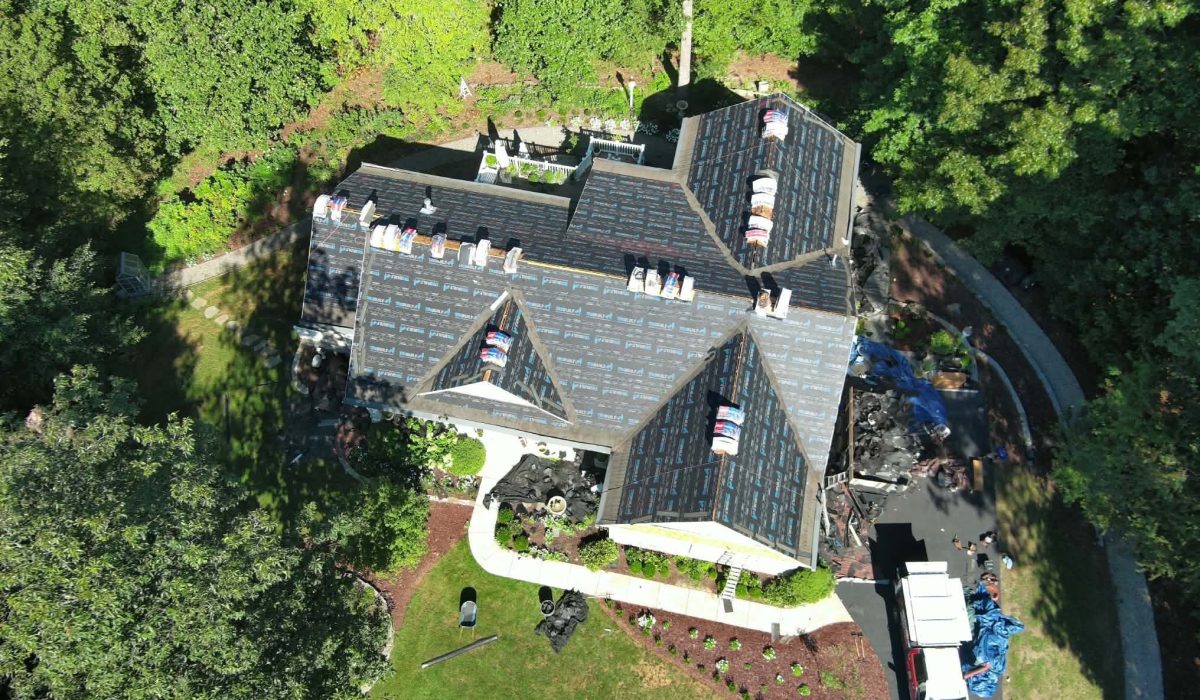
At Insured Roofs, our team documents visible roofing and exterior conditions through photographs and, where appropriate, drone imagery or thermal imaging.
A roofing inspection may evaluate:
Asphalt Shingles
Shingles may experience lifting, tearing, creasing, displacement, or other visible damage.
The contractor should examine the affected areas and surrounding materials to determine whether repairs are necessary.
Roof Flashing
Flashing helps protect vulnerable roof transitions around chimneys, valleys, skylights, walls, and other penetrations.
Loose or damaged flashing may create pathways for water intrusion.
Ridge Caps
Ridge cap shingles cover roof peaks and can be vulnerable to strong wind exposure.
Displaced ridge caps may leave underlying materials exposed.
Roof Vents and Pipe Boots
Roof penetrations often include seals and flashing components that require regular inspection.
Damage or deterioration around these components can contribute to leaks.
Gutters and Downspouts
Severe weather may loosen gutter fasteners, bend sections, or affect drainage.
Recording these findings helps homeowners understand whether additional exterior repairs are needed.
A professional inspection provides more reliable information than attempting to determine the roof’s condition from ground-level observations alone.
3. Request Clear Photographic Storm Restoration Documentation
Photographs are an important part of a professional roofing assessment.
They help identify affected components and provide a visual record of conditions observed during an inspection.
Effective storm restoration documentation should include photographs that show both the overall roofing area and specific defects.
For example, an inspection photograph may show a displaced shingle along a roof slope, while a close-up image identifies the condition of the affected material.
Useful photographic records may include:
- Overall roof condition photographs
- Close-up images of damaged roofing materials
- Photographs of flashing and roof penetrations
- Images of visible hail impact conditions
- Gutter and siding damage photographs
- Interior water staining, when present
Photographs should be clearly organized and accurately represent the property being inspected.
When possible, the contractor should identify the location of the affected area so the homeowner can better understand the findings.
Documentation should also distinguish confirmed observations from conditions requiring additional evaluation.
For example, staining on a ceiling may indicate moisture intrusion, but the source of that moisture may require further investigation.
This distinction helps prevent inaccurate conclusions and supports responsible roofing repair planning.
4. Understand the Roofing Construction Scope of Work
A construction scope of work is a written description of the labor, materials, and repair procedures proposed for a roofing project.
It is an important part of storm restoration documentation because it explains the work that may be necessary to address identified roofing problems.
Rather than simply stating that a roof needs repairs, a detailed construction scope should describe the affected areas and intended work.
Roofing Material Identification
The contractor identifies the existing roofing materials and the materials required for repair.
These may include asphalt shingles, architectural shingles, underlayment, flashing, ridge caps, and ventilation components.
Material compatibility is an important consideration when planning localized roofing repairs.
Roofing Measurements
Roof measurements help determine the quantity of materials required.
Depending on the project, these measurements may include roof slopes, valleys, ridges, perimeter edges, and affected surface areas.
Removal Requirements
The construction scope should identify roofing materials that need to be removed before repairs can begin.
This may include damaged shingles, flashing, or underlayment where removal is necessary.
Repair and Installation Methods
The scope should explain how affected roofing components will be repaired or replaced.
Installation methods should follow applicable manufacturer instructions and relevant building requirements.
Project Completion Details
A thorough roofing scope may also address cleanup, debris removal, inspection, and project completion procedures.
Understanding these details helps homeowners compare estimates and clarify what is included in the proposed construction work.
5. Review Roofing Materials, Measurements, and Repair Recommendations
Before approving roofing repairs, homeowners should understand which materials will be used and why the contractor recommends a particular approach.
A construction scope may identify replacement shingles, flashing components, underlayment, ventilation materials, and other products needed for the project.
Material selection should consider the existing roofing system, manufacturer installation requirements, and the condition of surrounding components.
Roof Repair Considerations
Localized repairs may be appropriate when damage is limited to a specific area and the surrounding roofing materials remain in serviceable condition.
For example, a small section of missing shingles may be repairable if compatible materials are available and the underlying components remain suitable.
Roof Replacement Considerations
More extensive damage may require evaluation for partial or complete roof replacement.
Factors that influence the recommendation include:
- Extent of visible damage
- Age and condition of the existing roofing system
- Material availability
- Condition of underlying components
- Installation requirements
- Applicable building codes
- Whether a durable repair can be completed
A replacement recommendation should be based on the property’s actual condition and construction requirements.
Professional storm restoration documentation helps explain why certain repairs are recommended without automatically assuming that a full roof replacement is necessary.
6. Keep Construction Documentation Organized
Roof repair projects often involve several documents, including inspection findings, photographs, estimates, material descriptions, and work authorizations.
Keeping these records organized can make future discussions easier.
Homeowners should consider maintaining copies of:
- Roof inspection reports
- Photographs of observed damage
- Roofing measurements
- Construction scope documents
- Repair estimates
- Material specifications
- Signed project agreements
- Change orders
- Final inspection information
- Warranties and completion records
These documents can provide useful references throughout the roofing project.
If the contractor identifies concealed damage after removing roofing materials, the new findings should be documented and explained before additional work is authorized.
Understanding Construction Documentation and Insurance
Homeowners may decide to provide construction-related records to their insurance carrier.
The Maryland Insurance Administration provides guidance on photographing storm-related property damage and maintaining records.
However, roofing contractors and insurance professionals have different responsibilities.
A roofing contractor provides technical construction information, including photographs, measurements, material descriptions, repair recommendations, and scope details.
Insurance carriers determine policy coverage and make claim decisions.
When requested, Insured Roofs can communicate technical construction information to insurance representatives, including measurements, material requirements, photographs, and repair scope details.
Insured Roofs does not act as a public adjuster, negotiate insurance settlements, determine coverage, or guarantee claim outcomes.
The purpose of construction documentation is to provide accurate information about the property and the work that may be necessary to repair it.
7. Choose an Experienced Storm Restoration Roofing Contractor
Choosing a qualified roofing contractor is an important part of planning storm-related repairs.
An experienced contractor should be able to explain observed damage, describe available repair options, and provide clear construction information.
Homeowners should consider several factors before selecting a roofing company.
Licensing and Insurance
Verify that the contractor has the appropriate licensing and insurance for the work and jurisdiction involved.
Roofing Experience
Look for a contractor familiar with roof inspections, storm-related damage, and the roofing materials installed on the property.
Clear Documentation
A reliable contractor should be able to explain inspection findings and provide understandable construction-related recommendations.
Written Repair Scope
Ask for a written description of the proposed work, including materials, labor, and relevant installation requirements.
Communication
Choose a contractor who can answer questions and explain what to expect during the repair process.
Insured Roofs provides roofing inspections, construction-related documentation, and storm restoration services for homeowners throughout Arlington and surrounding Northern Virginia communities.
Our licensed and insured team focuses on helping property owners understand their roofing systems and evaluate appropriate construction solutions.
Common Roof Damage Found During Storm Inspections
Storm damage can affect several areas of a roofing system.
Understanding common problem areas can help homeowners recognize why professional inspections and construction documentation are valuable.
Wind-Damaged Shingles
Strong winds can lift, crease, tear, or remove shingles.
Missing or displaced shingles may expose underlying roofing components to moisture.
Hail Damage to Roofing Materials
Hail can affect asphalt shingles, metal components, vents, and other roofing materials.
Not every mark or area of granule loss indicates functional hail damage. A professional assessment is needed to evaluate the condition.
Damaged Roof Flashing
Flashing protects roof transitions where water intrusion may occur.
Displaced or damaged flashing can contribute to roof leaks if the affected area is not properly repaired.
Roof Vent Damage
Roof vents and pipe penetrations may experience damage from wind, debris, or aging.
These components should be included in a comprehensive inspection when relevant.
Gutter and Downspout Damage
Wind, hail, and falling debris can damage gutter sections and drainage components.
Proper drainage is important for moving rainwater away from the roofing system and foundation.
Interior Water Damage
Water staining on ceilings or walls may indicate moisture intrusion.
The actual source of a leak can be located away from the visible interior stain, making professional investigation important.
Recording these conditions through storm restoration documentation helps establish which components may require repair or further evaluation.
Storm Restoration Documentation for Arlington, VA Homeowners
Arlington homeowners experience seasonal weather conditions that can affect roofing systems over time.
Thunderstorms, wind, heavy rainfall, and occasional hail may create roofing concerns, especially when materials are already aging or vulnerable.
Properties in Arlington neighborhoods such as Ballston, Clarendon, Rosslyn, Shirlington, and surrounding communities may have different roofing requirements depending on their construction, age, and roof design.
For example, a home with multiple valleys, skylights, or chimney transitions may have additional areas that require careful inspection.
Older roofing systems may also need closer evaluation of flashing details, material condition, and previous repairs.
For homeowners seeking storm damage roof repair in Arlington, VA, a properly documented inspection can help clarify the condition of the roof and the construction steps that may be necessary.
Insured Roofs serves Arlington and surrounding communities, including:
- Falls Church, VA
- Alexandria, VA
- Fairfax, VA
- Stafford, VA
- Fredericksburg, VA
- Other communities throughout the DMV service area
Our approach focuses on practical roofing solutions supported by professional observations and technical construction information.
How Insured Roofs Helps With Storm Restoration Documentation
At Insured Roofs, we understand that roof damage can leave homeowners uncertain about which repairs are needed.
Our team provides professional roofing inspections and construction-related assessments to help property owners better understand their options.
Detailed Roof Inspections
We evaluate accessible roofing components and identify visible conditions that may require attention.
Photographic Documentation
Our inspection process includes photographs of relevant roofing and exterior conditions.
Where appropriate, additional inspection methods such as drone imagery or thermal imaging may be used to assist the assessment.
Construction Scope Information
We help explain the roofing materials, measurements, repair procedures, and construction requirements associated with proposed repairs.
Roofing Repair Recommendations
Our team provides construction-related recommendations based on observed conditions and applicable installation considerations.
Professional Exterior Restoration
In addition to roofing services, Insured Roofs works with exterior components such as gutters and siding where they are part of the project.
Our goal is to give homeowners clear information and dependable construction services without making unsupported promises about insurance outcomes.
Frequently Asked Questions About Storm Restoration Documentation
1. What is storm restoration documentation?
Storm restoration documentation is the process of recording visible roofing and exterior conditions after severe weather. It may include inspection photographs, measurements, material information, repair recommendations, and construction scope details.
2. Why is storm restoration documentation important?
It helps homeowners understand observed property conditions and the construction work that may be necessary. Accurate documentation also supports clearer discussions about repairs, materials, and project estimates.
3. What should be included in a roofing construction scope?
A roofing construction scope should describe the affected components, measurements, materials, removal requirements, proposed installation methods, and other relevant project details.
4. Can wind damage a roof without removing shingles?
Yes. Wind can lift or crease shingles and affect flashing or other roofing components without removing the shingles completely. Professional inspection helps identify visible damage and determine whether repairs are necessary.
5. Should I inspect my roof after a hailstorm?
If you suspect damage, scheduling a professional inspection is a sensible step. Hail can affect roofing materials differently depending on impact conditions, material type, and existing roof condition.
6. Can roofing contractors provide documentation for insurance purposes?
Roofing contractors can provide photographs, measurements, construction-related findings, material information, and repair recommendations that homeowners may choose to share with their carrier. The insurance carrier determines coverage and claim outcomes.
7. Does storm restoration documentation guarantee insurance approval?
No. Documentation does not guarantee insurance coverage or claim approval. Insurance decisions depend on the applicable policy, relevant circumstances, and the carrier’s assessment.
8. How do I know whether my roof needs repair or replacement?
The recommendation depends on the extent of damage, roofing material condition, repair feasibility, installation requirements, and other construction factors. A professional inspection can help determine suitable options.
9. How long does a storm damage roof inspection take?
The duration depends on the property’s size, roof complexity, accessibility, safety conditions, and inspection requirements. Your roofing contractor can provide a more specific estimate when scheduling the visit.
10. Where can I schedule storm restoration documentation services in Arlington, VA?
Insured Roofs provides roof inspections, construction-related documentation, and storm restoration services for homeowners in Arlington and surrounding Northern Virginia communities.
Visit Insured Roofs to learn more about available roofing services and schedule an inspection.
Protect Your Property With Professional Roof Inspections and Clear Documentation
Storm damage can affect roofing materials, flashing, gutters, and other exterior components, sometimes without creating immediate interior leaks.
Understanding the condition of your property is an important part of planning appropriate repairs.
Storm restoration documentation helps homeowners review visible roofing damage, construction scope details, and repair recommendations before making decisions about their property.
At Insured Roofs, our team focuses on providing clear roofing inspections, construction-related documentation, and practical restoration solutions.
Whether your home has experienced strong winds, hail, heavy rainfall, or other weather-related concerns, a professional roofing assessment can help determine the appropriate next steps.
Schedule Your Roof Inspection With Insured Roofs
Looking for professional roofing inspections or storm damage roof repair in Arlington, VA?
Insured Roofs is ready to help you understand your roofing system and review your repair options.
Call: (703) 828-7462
Website: www.insuredroofs.com
Serving: Arlington, Falls Church, Alexandria, Fairfax, Stafford, Fredericksburg, and surrounding DC, Maryland, and Virginia communities.
Schedule Your Roof Inspection Today!
Important Disclaimer: Insured Roofs is a roofing and exterior restoration contractor. We provide inspections, construction-related documentation, photos, measurements, repair recommendations, and scope information. We do not act as a public adjuster and do not determine, negotiate, or guarantee insurance coverage. Coverage and claim decisions are made by the insurance carrier.
VA LIC# 2705185320 | MD LIC# 150425q