Can Animals Damage Your Roof? Common Entry Points and Warning Signs
Your roof protects your home from heavy rain, strong winds, snow, and changing temperatures. However, weather is not the only threat to your roofing system. Squirrels, raccoons, birds, and rodents can also cause unexpected problems that compromise roofing materials and create potential entry points into your attic.
Animal roof damage is a concern for homeowners throughout Arlington, Alexandria, Falls Church, Fairfax, and surrounding Northern Virginia communities, especially in neighborhoods with mature trees and wooded areas.
Small animals may appear harmless, but their nesting habits, chewing behavior, and attempts to enter attics can damage roof vents, soffits, fascia boards, and other vulnerable components.
What starts as a small opening near a roof edge can eventually lead to moisture intrusion, damaged insulation, and costly repairs.
Understanding the early signs of animal roof damage is important for protecting your property.
In this guide, we’ll explain which animals commonly damage roofs, where wildlife enters, the warning signs to watch for, and how professional inspections can help prevent further deterioration.
What Is Animal Roof Damage?
Animal roof damage refers to physical deterioration caused by wildlife interacting with a home’s roofing system.
Animals may chew through vulnerable materials, loosen roofing components, create nesting spaces, or enlarge existing openings around the roofline.
Unlike severe storm damage, which may happen suddenly, wildlife-related roofing problems often develop gradually.
Common examples include:
- Chewed wooden fascia boards and soffits
- Damaged roof vents and ventilation screens
- Loose or displaced shingles
- Openings around roof penetrations
- Torn or deteriorated flashing
- Nesting materials blocking ventilation
- Moisture intrusion through damaged openings
- Damaged attic insulation
In many cases, wildlife takes advantage of existing roof deterioration rather than creating the original problem.
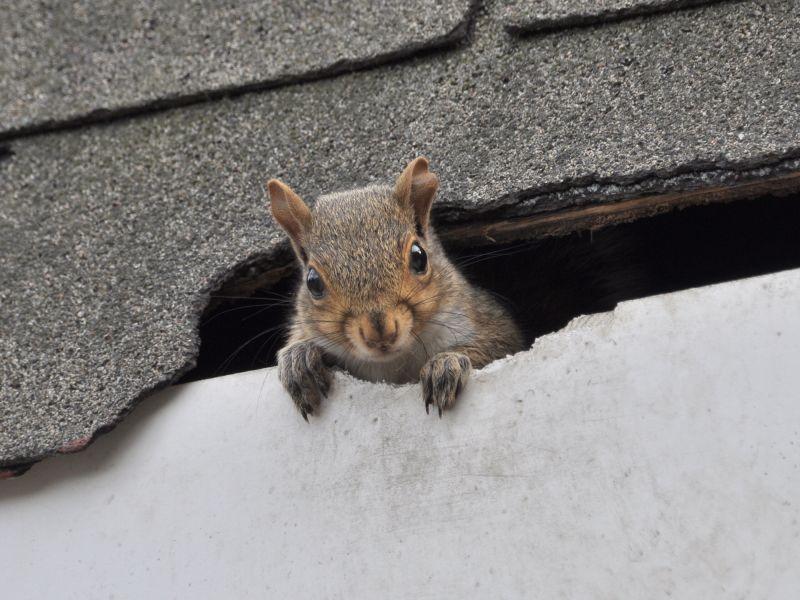
For example, a squirrel may discover a weakened soffit panel and enlarge the opening to access the attic.
Early identification of animal roof damage can help homeowners prevent additional deterioration and protect vulnerable areas of their roofing systems.
Which Animals Can Damage Your Roof?
Several wildlife species can affect residential roofing systems in Northern Virginia.
1. Squirrels: Chewing Through Roofing Components
Squirrels are among the animals homeowners frequently notice moving across rooftops.
Their sharp teeth allow them to gnaw through wood, plastic, and certain softer building materials.
Common examples of squirrel roof damage include:
- Chewed fascia boards
- Enlarged gaps around soffits
- Damaged attic vent screens
- Disturbed insulation
- Openings near roof edges
Squirrels can use nearby trees, fences, and connected structures to access rooftops.
Once they discover a vulnerable opening, they may repeatedly return to the same location.
Homeowners who hear scratching or movement inside the attic should consider the possibility of wildlife activity.
2. Raccoons: Damage Around Attics and Roof Edges
Raccoons are strong animals capable of pulling, bending, or displacing vulnerable building materials.
They may target weakened soffits, roof vents, and openings around the roofline.
Possible signs of raccoon-related animal roof damage include:
- Bent ventilation covers
- Torn soffit panels
- Enlarged attic openings
- Displaced roofing materials
- Disturbed insulation
- Nesting debris inside attic spaces
Raccoons sometimes seek sheltered spaces during breeding seasons or periods of severe weather.
Because raccoons may behave defensively and can carry diseases, homeowners should never attempt to capture or remove them without professional assistance.
3. Birds: Nesting Near Roof Vents and Gutters
Birds generally contribute to roofing problems through nesting activity rather than chewing or tearing materials.
Common nesting locations include:
- Roof vents
- Chimney openings
- Gutters
- Eaves
- Gaps beneath exterior roofing components
Bird nests can restrict airflow and interfere with proper drainage.
When gutters become blocked by nesting materials, rainwater may overflow and affect fascia boards or nearby exterior surfaces.
Bird activity may also leave accumulated debris and droppings around roof components.
Homeowners should avoid disturbing active nests without checking applicable wildlife protections.
4. Mice and Rats: Entering Through Small Openings
Rodents can enter buildings through relatively small exterior gaps.
Although they may not directly damage shingles, their activity can affect attic insulation, electrical wiring, and vulnerable roofline components.
Warning signs include:
- Scratching sounds inside walls or ceilings
- Chewed materials near attic openings
- Droppings in accessible attic spaces
- Damaged insulation
- Small gaps around vents or soffits
Rodents may use existing construction gaps or deteriorated roof components as entry points.
A professional inspection can help determine whether these openings require roofing repairs, wildlife exclusion, or both.
7 Common Animal Roof Entry Points Homeowners Should Know
Animals often enter homes through vulnerable roofline areas rather than through the main shingle surface.
Understanding these common entry points can help homeowners recognize potential roofing problems.
1. Roof Vents
Roof vents allow air to circulate through attic spaces.
However, damaged vent covers, deteriorated screens, or improperly secured components can create openings.
Wildlife may exploit these weak points to enter protected attic areas.
2. Soffits and Eaves
Soffits cover the underside of roof overhangs.
When soffit panels become loose, damaged, or deteriorated, animals may access the space behind them.
This is one of the locations where animal roof damage may develop.
3. Fascia Boards
Fascia boards run along the roof edge and help support gutter systems.
Wooden fascia can deteriorate from prolonged moisture exposure.
Animals may chew or pull at weakened sections, creating larger openings.
4. Chimney Openings
An uncapped or damaged chimney may attract birds, squirrels, or raccoons looking for shelter.
Properly installed chimney caps can help reduce wildlife access while maintaining the chimney’s required function.
5. Damaged Shingles and Roof Edges
Loose shingles, deteriorated roof edges, and exposed underlayment can create vulnerable areas.
Although animals do not always cause the original damage, their activity may worsen an existing problem.
6. Roof-to-Wall Intersections
Areas where a roof meets a wall, dormer, or other structural feature contain flashing and overlapping construction materials.
Existing gaps or deterioration in these locations may provide access for smaller wildlife species.
7. Gaps Around Roof Penetrations
Plumbing vent pipes, exhaust outlets, and other roof penetrations require properly installed flashing and seals.
Deteriorated materials around these components may create openings that animals can exploit.
Important: Not every roof opening is a wildlife entry point. Roof ventilation and drainage systems must remain functional. Never seal openings without understanding their purpose.
9 Dangerous Warning Signs of Animal Roof Damage
Recognizing the early warning signs of animal roof damage may help homeowners address vulnerable roofing components before additional deterioration occurs.
1. Scratching or Movement in the Attic
Scratching, running, or tapping noises may indicate animals moving through attic spaces.
Sounds may become more noticeable early in the morning or at night, depending on the species.
Repeated noises should be investigated by an appropriate professional.
2. Visible Holes Near the Roofline
Openings around soffits, vents, and fascia boards may indicate wildlife activity.
Even a small opening can allow certain animals to enter attic spaces.
These gaps may also expose vulnerable materials to moisture.
3. Damaged or Loose Shingles
Animals moving across vulnerable roofing areas may disturb loose materials.
However, damaged shingles may also result from wind, aging, or installation problems.
A professional evaluation helps determine the likely cause.
4. Chewed Wood or Exterior Materials
Visible gnaw marks around fascia boards, trim, or soffits are possible indicators of squirrel or rodent activity.
Chewed materials may create openings that grow larger over time.
5. Nesting Materials Around Roof Vents
Twigs, leaves, grass, and other nesting materials around roof openings may indicate wildlife activity.
Blocked ventilation should be evaluated because restricted airflow can affect attic conditions.
6. Unusual Animal Activity on the Roof
Repeatedly seeing animals enter and exit the same roofline location may suggest an accessible opening.
Observe animal movement from a safe location on the ground.
7. Water Stains on Ceilings
When wildlife damages roof components, rainwater may enter through exposed openings.
Water stains, peeling paint, or damp drywall may indicate moisture intrusion.
However, these symptoms can also result from plumbing leaks or other building problems.
8. Unpleasant Odors From the Attic
Strong or unusual odors may indicate nesting materials, animal waste, or other wildlife-related problems.
A qualified wildlife professional can help investigate the cause safely.
9. Damaged Gutters or Blocked Downspouts
Nesting debris and accumulated materials can interfere with gutter drainage.
Overflowing gutters may contribute to moisture problems around fascia boards, siding, and foundation areas.
If you notice several of these animal roof damage warning signs, consider scheduling an inspection before the condition worsens.
Can Animal Roof Damage Cause Roof Leaks?
Yes. Animal roof damage can contribute to roof leaks when wildlife creates or enlarges openings in protective roofing components.
For example, an animal may damage a roof vent cover or disturb weakened flashing.
During heavy rainfall, water may enter through the compromised area.
Potential consequences include:
- Wet attic insulation
- Stained ceilings
- Damaged roof decking
- Wood deterioration
- Mold growth under suitable moisture conditions
- Interior drywall damage
- Reduced insulation performance
The severity depends on the location of the opening, surrounding materials, and how long moisture exposure continues.
Not every wildlife entry point causes a leak, but damaged roofing components should be evaluated promptly.
A professional roof inspection can help determine whether animal roof damage has affected nearby flashing, underlayment, or structural materials.
Why Northern Virginia Homes May Be Vulnerable to Wildlife Roof Damage
Northern Virginia includes established residential neighborhoods with mature trees, landscaped properties, and wooded areas.
In communities such as Arlington, Falls Church, Alexandria, Fairfax, Stafford, and Fredericksburg, these conditions can bring wildlife close to residential buildings.
Several property features may increase the likelihood of animals accessing roofing systems.
Overhanging tree branches: Trees near homes can provide convenient access routes for squirrels and other climbing animals.
Aging exterior materials: Older soffits, fascia boards, and ventilation covers may develop weaknesses over time.
Existing roof deterioration: Loose components and deteriorated flashing may create vulnerable openings.
Sheltered attic spaces: Attics may provide protected locations for animals seeking nesting areas.
Seasonal weather changes: Wildlife sometimes seeks shelter during colder temperatures or severe weather.
Routine inspections and preventive roof maintenance help homeowners identify these vulnerabilities before they become larger problems.
How to Prevent Animal Roof Damage
Although no roofing system can completely eliminate wildlife activity, preventive maintenance can reduce the likelihood of damage.
1. Trim Tree Branches Near Your Roof
Maintain appropriate clearance between nearby tree branches and roofing materials.
Tree maintenance can reduce direct access routes and prevent branches from scraping shingles during windy weather.
Hire a qualified tree professional when branches are large or close to electrical lines.
2. Inspect Soffits and Fascia Boards
Look for visible deterioration, loose panels, or openings along the roofline.
Repairing damaged materials can help prevent animals from enlarging existing gaps.
3. Maintain Roof Vents
Roof ventilation components should remain secure and functional.
Damaged screens or covers should be repaired or replaced with products appropriate for the ventilation system.
4. Keep Gutters Clean
Remove leaves, twigs, and debris from gutters and downspouts.
Proper drainage can help reduce moisture-related deterioration around roof edges.
5. Address Missing or Damaged Shingles
Loose or missing shingles should be professionally evaluated.
Repairing exposed roofing areas helps protect underlying materials from moisture and additional damage.
6. Schedule Routine Roof Inspections
Professional inspections can identify deteriorated roof components, loose flashing, and other potential weaknesses.
For homeowners in Arlington and surrounding Northern Virginia communities, inspections are particularly useful after severe weather or when unusual roofline activity is observed.
7. Work With Qualified Wildlife Professionals
If animals are already living inside your roof or attic, contact a qualified wildlife removal specialist.
Wildlife removal and roofing repairs often require coordination.
Animals should be removed safely before permanent entry-point repairs are completed. Avoid sealing openings while animals or dependent young may still be inside.
Preventing animal roof damage begins with maintaining vulnerable roofing components and addressing construction problems before wildlife can exploit them.
For additional homeowner guidance, the Virginia Department of Wildlife Resources provides information about preventing and resolving wildlife conflicts, including reducing animal access to buildings and managing attractive food sources.
The Humane Society of the United States also provides practical information about identifying and closing rodent entry points around residential properties.
What Should You Do If Animals Are Already in Your Roof?
If you suspect wildlife has entered your roofing system, take the following steps.
Step 1: Stay on the Ground
Never climb onto your roof or attempt to investigate an opening from a ladder.
Roof surfaces can be dangerous, particularly when wet or damaged.
Step 2: Observe Visible Wildlife Activity
Look for animals entering or exiting roofline openings from a safe distance.
Avoid approaching wildlife or attempting to block an occupied opening.
Step 3: Document Visible Damage
Take photographs of accessible exterior conditions without approaching animals or entering unsafe areas.
These photographs may help contractors understand the visible problem.
Step 4: Contact a Wildlife Removal Professional
A qualified wildlife specialist can identify the species and recommend appropriate removal or exclusion methods.
Step 5: Schedule a Professional Roof Inspection
After wildlife activity has been addressed, a roofing contractor can evaluate damaged shingles, vents, soffits, flashing, and other affected components.
Step 6: Complete Necessary Roofing Repairs
Repair damaged roofing materials and appropriately secure entry points while maintaining required ventilation.
These steps help address both the wildlife problem and the underlying construction damage.
When Should You Schedule a Professional Roof Inspection?
Consider scheduling an inspection if you notice:
- Visible holes around soffits or roof vents
- Chewed or damaged fascia boards
- Repeated wildlife activity around roof openings
- Missing or displaced shingles
- Water stains appearing after rainfall
- Loose flashing around roof penetrations
- Signs of moisture near attic areas
- Deteriorated roof components following wildlife removal
A professional roof inspection can help distinguish animal roof damage from storm-related deterioration, aging materials, and other roofing problems.
This distinction matters because the appropriate repair depends on the cause and extent of the damage.
Addressing roofing vulnerabilities early may reduce the risk of additional deterioration.
How Insured Roofs Helps Northern Virginia Homeowners
At Insured Roofs, we help homeowners understand the condition of their roofing systems and identify construction-related issues that may require attention.
Our licensed and insured roofing team serves Arlington and surrounding Northern Virginia communities.
When wildlife activity affects roofing materials, our team can evaluate visible roof conditions and recommend appropriate roofing repairs.
Depending on the property and inspection requirements, our roofing services may include:
- Roof condition assessments
- Documentation of visible roofing damage
- Roof vent and flashing evaluations
- Missing or damaged shingle assessments
- Roof leak investigations
- Roofing repair recommendations
- Exterior damage documentation
We focus on the roofing and exterior construction aspects of the problem.
Active animal removal, trapping, and wildlife exclusion should be handled by qualified wildlife professionals.
Whether you’re dealing with deteriorated roof vents, damaged shingles, or signs of moisture intrusion, understanding your roof’s condition is an important first step.
If you suspect animal roof damage in Arlington, VA, a professional roofing evaluation can help identify compromised materials and appropriate repair options.
Frequently Asked Questions About Animal Roof Damage
1. Can squirrels damage roof shingles?
Yes. Squirrels can contribute to roofing problems by chewing vulnerable materials and accessing openings around roof edges. They may also disturb already loose roofing components. However, not every damaged shingle is caused by wildlife.
2. What animals commonly damage roofs in Virginia?
Squirrels, raccoons, birds, mice, and rats are among the animals that may affect rooflines and attic spaces in Virginia. The type of damage depends on the species and the construction materials involved.
3. Can animals enter through roof vents?
Yes. Damaged or improperly secured roof vents can provide entry points for wildlife. Properly selected vent covers and screens help reduce this risk while maintaining necessary airflow.
4. How do I know if animals are living in my attic?
Common warning signs include scratching sounds, repeated animal activity near roof openings, nesting materials, droppings, and unusual odors. A wildlife specialist can help confirm the source.
5. Can animal roof damage cause water leaks?
Yes. If wildlife damages flashing, vents, soffits, or other protective components, rainwater may enter through the affected area. A roof inspection can help determine whether the roofing system has been compromised.
6. Should I repair the roof before removing animals?
Generally, active wildlife should be addressed before permanently closing entry points. Sealing openings too early can trap animals inside the building, including dependent young. Coordinate wildlife removal with roofing repairs.
7. Does homeowners insurance cover animal roof damage?
Coverage varies depending on the policy, animal involved, cause of damage, and applicable exclusions. Homeowners should review their policy and contact their insurance carrier for coverage questions.
Insured Roofs provides construction-related inspections and documentation. We do not act as a public adjuster or determine, negotiate, or guarantee insurance coverage.
8. How often should I inspect my roof for animal damage?
Homeowners can periodically check their rooflines from the ground and look for changes after severe weather or unusual wildlife activity. A professional can recommend an appropriate inspection schedule based on roof age, condition, and surrounding environment.
9. Can animal roof damage lead to expensive repairs?
Yes. Small openings can sometimes contribute to water intrusion, insulation damage, and deterioration of underlying materials. Addressing roofing problems early may help limit the extent of repairs.
10. Who should I call for animal roof damage in Arlington, VA?
If animals are actively present, contact a qualified wildlife removal specialist first.
For compromised roofing components, Insured Roofs can provide a professional roof inspection and recommend appropriate roofing repairs.
Protect Your Home From Animal Roof Damage
Animal roof damage can begin with something as small as a loose vent cover, deteriorated soffit, or opening near the roof edge.
Without attention, these vulnerabilities may allow wildlife to enter attic spaces or expose roofing materials to moisture.
The best approach is to recognize warning signs early, address wildlife activity safely, and repair damaged roofing components before additional deterioration occurs.
Regular roof maintenance, professional inspections, and timely repairs can help protect your home throughout the year.
If you’ve noticed suspicious openings, damaged roofing materials, or potential leaks, a professional evaluation can help you understand the next steps.
Schedule Your Roof Inspection With Insured Roofs
Protect your home with a roofing team that understands the conditions affecting Northern Virginia properties.
Insured Roofs provides roofing inspections, repair assessments, and exterior damage documentation for homeowners throughout Arlington, Falls Church, Alexandria, Fairfax, Stafford, Fredericksburg, and surrounding communities.
Don’t let a small opening become a larger roofing problem.
Schedule Your Roof Inspection Today!
Call: (703) 828-7462
Visit: www.insuredroofs.com
Insured Roofs — Licensed & Insured Roofing Professionals
VA LIC# 2705185320 | MD LIC# 150425