
How Blocked Gutters Can Put Your Entire Roofing System at Risk
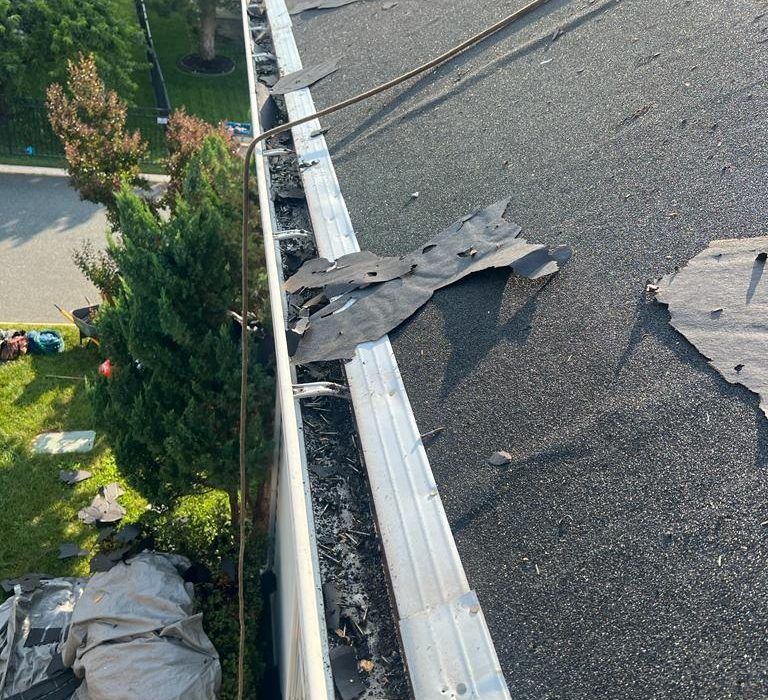
Gutters may seem like a small part of your home’s exterior, but they play an important role in managing the water that runs off your roof. When leaves, twigs, dirt, roofing granules, and other debris accumulate inside the gutter system, rainwater may no longer drain away from the home as intended.
That is when clogged gutters roof damage can become a concern.
Instead of moving efficiently through the gutters and downspouts, water can overflow, collect around roof edges, saturate fascia boards, and contribute to moisture problems around vulnerable areas of the home. During colder weather, poor drainage may also contribute to conditions that make ice-related problems worse.
Understanding the connection between clogged gutters and roof damage can help homeowners recognize warning signs earlier and know when it may be time for a professional roof and gutter inspection.
Why Are Gutters Important to Your Roof?
Your roofing system is designed to shed water. As rain reaches the roof, it travels down the roof surface toward the eaves. Gutters collect that runoff and direct it through downspouts toward designated drainage areas.
When everything is working correctly, this helps move large amounts of water away from vulnerable portions of the home.
A functioning gutter system can help protect:
- Roof edges
- Fascia boards
- Soffits
- Siding
- Exterior walls
- Landscaping
- Areas around the foundation
The gutter system therefore works alongside the roofing system rather than functioning as a completely separate component.
When gutter debris prevents water from flowing properly, the drainage system may no longer perform as intended.
How Do Clogged Gutters Cause Roof Damage?
The primary issue with clogged gutters roof damage is improper water movement.
Leaves and other debris can create blockages inside a gutter or downspout. As rainfall continues, water has fewer places to go.
Eventually, the gutter can fill and overflow.
Depending on the roof design, gutter condition, weather, and severity of the blockage, excess moisture may affect roof edges and nearby exterior components.
Here are some of the most important problems homeowners should understand.
1. Water Can Overflow Near the Roof Edge
One of the easiest signs of clogged gutters to recognize is water spilling over the sides during rainfall.
Instead of traveling toward a downspout, rainwater begins flowing over the front or back of the gutter.
Repeated exposure to overflowing water can keep nearby building materials wet longer than intended.
This is especially important around the roof edge, where several components meet. Persistent moisture in these areas should not automatically be assumed to be harmless.
If you regularly see water pouring over your gutters during rain, it is worth determining whether debris, a blocked downspout, improper slope, or another gutter problem is restricting drainage.
2. Fascia Boards May Be Exposed to Excess Moisture
The fascia is the board located along the lower edge of the roof, and gutters are commonly installed against it.
When gutters overflow repeatedly, fascia boards can experience additional moisture exposure.
Over time, depending on the material and conditions, persistent moisture can contribute to deterioration, staining, peeling finishes, or rot.
This matters because the fascia is part of the roof-edge assembly.
A homeowner dealing with clogged gutters and roof damage should therefore look beyond the gutter itself. The condition of nearby fascia and soffit materials may also need to be evaluated.
3. Moisture Can Affect Soffits and Roof-Edge Materials
Soffits are another area that may experience problems when drainage around the roof edge is not functioning correctly.
Overflowing water can run across exterior surfaces instead of following its intended drainage path.
If moisture repeatedly reaches vulnerable joints, gaps, deteriorated materials, or other openings, the possibility of water intrusion increases.
A professional roof inspection can help determine whether a gutter issue is isolated or whether nearby roof components also show signs of deterioration.
4. Clogged Gutters Can Contribute to Roof Leak Conditions
A clogged gutter does not automatically mean your roof is leaking.
However, poor drainage can create conditions that place additional moisture around areas of the roof that should normally drain efficiently.
Roof leaks often develop around vulnerable locations such as flashing, penetrations, transitions, roof edges, and deteriorated materials. Excessive water exposure can make existing weaknesses more important.
This is why homeowners should avoid waiting for a ceiling stain before investigating obvious drainage problems.
By the time water becomes visible indoors, moisture may already have traveled through portions of the roofing or building assembly.
5. The Extra Weight Can Stress Gutters and Fasteners
Wet leaves and debris can become surprisingly heavy.
Combine that debris with standing rainwater and the weight inside a gutter system can increase considerably.
Over time, gutters may begin to:
- Sag
- Pull away from fascia
- Lose their proper slope
- Develop loose fasteners
- Separate at joints
- Drain incorrectly
A sagging gutter can make the original drainage problem even worse because water may begin collecting in low areas rather than moving toward the downspouts.
This can turn a simple blockage into a larger roof and gutter maintenance concern.
6. Clogged Gutters May Contribute to Winter Problems
Cold weather creates another reason to pay attention to gutter maintenance.
When drainage is restricted and temperatures fall below freezing, standing water can freeze.
Ice can add substantial weight to gutters and place additional stress on fasteners and connections. Freeze-thaw cycles can also affect already vulnerable roof-edge materials.
Ice dams are more complex than simply having clogged gutters. Attic temperature, insulation, ventilation, snow conditions, and outdoor temperatures can all contribute.
However, keeping drainage pathways clear remains an important part of maintaining the roof-edge system before winter conditions arrive.
7. Water May Spill Down Siding and Exterior Walls
Not every consequence of a clogged gutter occurs directly on the roof.
Overflowing gutters can send water down siding, trim, windows, doors, and exterior walls.
Over time, repeated exposure may contribute to staining, deterioration, or moisture concerns depending on the materials and construction.
This is why gutter maintenance should be viewed as part of broader exterior home maintenance.
Insured Roofs’ marketing strategy specifically treats roofing, siding, and gutters as connected areas of exterior expertise rather than isolated services.
8. Poor Drainage Can Affect Areas Around the Foundation
Gutters and downspouts are intended to help control where roof runoff goes after leaving the roof.
If gutters overflow or downspouts are blocked, large amounts of water may collect close to the house instead.
Depending on grading, soil conditions, drainage design, and the home itself, excessive water near the foundation can create additional moisture concerns.
The key principle is simple:
Water should be controlled and directed—not allowed to collect wherever gravity takes it.
Warning Signs Your Gutters May Be Clogged
You do not necessarily need to climb a ladder to notice that something is wrong.
In fact, homeowners should avoid unnecessary roof climbing. Insured Roofs‘ content standards specifically emphasize safe homeowner education and avoiding unsafe roof footage or behavior.
From a safe location on the ground, watch for signs such as:
- Water spilling over gutter edges during rain
- Gutters visibly sagging
- Plants or weeds growing from gutters
- Debris visible above the gutter line
- Water stains on siding
- Discoloration around fascia or soffits
- Downspouts producing little or no water during heavy rain
- Water collecting near the house
- Sections of gutter pulling away from the roofline
- Unusual water flow around roof edges
One warning sign does not necessarily tell you exactly what is wrong. A professional evaluation can help identify whether the problem involves debris, gutter pitch, downspouts, damaged components, or the roofing system itself.
Why Roofing Granules in Gutters Deserve Attention
Leaves are not the only material homeowners may find in gutters.
Asphalt shingles have protective surface granules, and some granules naturally loosen throughout a roof’s life. They can eventually wash into gutters and downspouts.
A small amount does not automatically mean the roof needs replacement.
However, unusually heavy granule buildup in gutters especially when combined with visible shingle wear, aging, or recent severe weather may justify a closer roof inspection.
A roofing professional can evaluate the overall condition rather than making a decision based only on what appears inside the gutter.
How Often Should Homeowners Check Their Gutters?
There is no single schedule that works perfectly for every property.
Homes surrounded by mature trees may accumulate leaves and organic debris more quickly. Properties with fewer nearby trees may need attention less frequently.
Weather also matters.
Homeowners should consider checking gutter performance:
- After heavy leaf fall
- Following severe weather
- Before periods of frequent rainfall
- Before winter
- When gutters visibly overflow
- When unexplained exterior staining appears
- When a downspout appears blocked
- As part of routine exterior maintenance
The goal is not simply to follow a calendar. It is to keep the drainage system functioning properly.
Why You Shouldn’t Ignore an Overflowing Gutter
An overflowing gutter can look like a minor inconvenience during a rainstorm.
But it is evidence that water is not following its intended drainage path.
Ignoring the problem allows the same areas to be exposed every time it rains.
What begins as accumulated leaves could eventually involve sagging gutters, damaged fascia, deteriorated roof-edge materials, or unwanted moisture.
Addressing the cause early is generally much simpler than waiting until visible deterioration develops.
Can Gutter Guards Prevent Clogged Gutters?
Gutter guards can help reduce the amount of leaves and larger debris entering a gutter system, but they do not necessarily eliminate maintenance.
Smaller debris may still enter the gutters, and material can sometimes accumulate on top of certain guard systems.
The effectiveness of a gutter guard depends on factors such as:
- Guard design
- Roof configuration
- Nearby trees
- Type of debris
- Installation
- Gutter condition
- Maintenance
Homeowners with gutter guards should still pay attention to drainage performance, especially during heavy rain.
What Should You Do If Your Gutters Keep Overflowing?
If your gutters repeatedly overflow, identifying the underlying cause is more useful than simply treating the symptom.
Possible causes include clogged gutters, blocked downspouts, improper gutter slope, undersized drainage components, loose or damaged sections, or other installation and maintenance issues.
If you can see the issue safely from the ground, document what happens during rainfall.
Avoid climbing onto a wet roof or attempting risky repairs.
A professional inspection can evaluate the gutter system along with the surrounding roof edge, fascia, soffits, flashing, and other relevant components.
Roof Maintenance and Gutter Maintenance Should Work Together
Homeowners sometimes think of the roof and gutters as completely separate systems.
They are closely connected.
The roof sheds water.
The gutters collect it.
The downspouts move it away.
When one part of that sequence is not functioning properly, water may begin moving into places where it was not intended to go.
That is why roof and gutter maintenance should be considered together.
During a professional evaluation, visible roof conditions and drainage issues can be documented so homeowners have a clearer understanding of what may need attention.
Frequently Asked Questions About Clogged Gutters and Roof Damage
Can clogged gutters actually damage a roof?
Clogged gutters can contribute to conditions that affect roof edges and surrounding materials. When gutters cannot drain properly, water may overflow or remain near fascia, soffits, and other vulnerable areas. The actual extent of any roof damage from clogged gutters depends on the roof, drainage system, weather conditions, and how long the problem has existed.
Can clogged gutters cause roof leaks?
They can contribute to moisture conditions around vulnerable roof-edge areas, but not every clogged gutter will result in a roof leak. If you notice overflowing gutters together with ceiling stains, damaged fascia, deteriorated soffits, or other moisture signs, consider having the area professionally inspected.
How do I know whether my gutters are clogged?
Common signs include water spilling over the gutter during rain, visible debris, sagging sections, plants growing inside the gutter, poor downspout flow, and water collecting around the property.
Can clogged gutters damage fascia boards?
Repeated exposure to overflowing or standing water can contribute to moisture-related deterioration in fascia materials, particularly when the material or protective finish is already vulnerable.
Do gutter guards eliminate the need for gutter cleaning?
Not necessarily. Gutter guards may reduce certain types of debris, but gutters and downspouts should still be monitored to ensure water is flowing properly.
Why are there shingle granules in my gutters?
Some granule shedding can occur naturally with asphalt shingles. Larger or unusual amounts may deserve attention, particularly on an older roof or after severe weather. A professional roof inspection can provide better context.
Should I climb onto my roof to check my gutters?
Homeowners should avoid unnecessary roof climbing, particularly when surfaces are wet, steep, damaged, or otherwise unsafe. Many warning signs can be observed from the ground, while trained professionals can perform a closer evaluation when necessary.
Should gutters be inspected when the roof is inspected?
It can be useful to evaluate both because gutters are part of the roof’s overall drainage pathway. Looking at roof surfaces, roof edges, gutters, downspouts, fascia, and related components can provide a more complete picture of how water is being managed around the home.
Protect Your Roof by Paying Attention to Drainage
Your gutters may not be the most noticeable feature of your home, but the work they perform is important.
A properly functioning gutter system helps collect roof runoff and move it toward appropriate drainage areas. When debris blocks that pathway, water can overflow and expose roof edges, fascia, soffits, siding, and other exterior components to unnecessary moisture.
Recognizing clogged gutters roof damage early can help homeowners address drainage concerns before they develop into larger problems.
Concerned About Your Gutters or Roof?
If your gutters are overflowing, sagging, holding debris, or showing other signs of poor drainage, Insured Roofs can inspect the visible condition of your roofing and exterior system and help you understand what may need attention.
Insured Roofs serves homeowners throughout Northern Virginia and the DC, Maryland & Virginia area, providing roofing and exterior restoration expertise with clear documentation and homeowner-focused guidance.
Schedule your roof inspection with Insured Roofs today and get a clearer picture of your roof and gutter condition.
Serving Arlington, Falls Church, Alexandria, Fairfax, Stafford, Fredericksburg, and surrounding communities.