
How Waterproof Roof Membranes Protect Vulnerable Areas of Your Roof
When homeowners think about a roofing system, shingles are usually the first material that comes to mind. However, several important protective layers sit underneath the visible roof surface. One of the most important is ice and water shield.
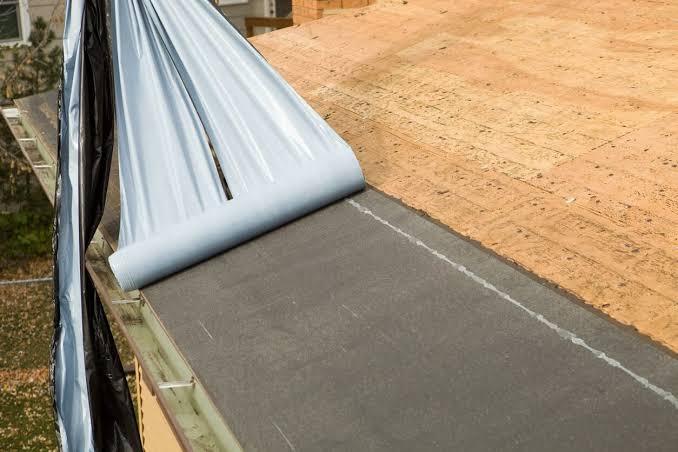
Ice and water shield is a self-adhering waterproof membrane installed beneath shingles in areas that are more vulnerable to moisture. It is commonly used near eaves, roof valleys, chimneys, skylights, vents, and other penetrations.
Unlike standard underlayment, ice and water shield bonds directly to the roof deck and helps form a more watertight barrier. This added protection can be especially useful where rain, melting snow, or backed-up water may reach beneath the shingles.
Understanding where ice and water shield is used and how it works can help homeowners better understand the layers that make up a complete roofing system.
What Is Ice and Water Shield?
Ice and water shield is a waterproof roofing membrane typically made from rubberized asphalt with an adhesive backing.
It is installed directly over prepared roof decking before the finished roofing materials are applied. Because it adheres to the deck, the membrane creates a continuous protective layer over vulnerable areas.
One useful characteristic of ice and water shield is its ability to help seal around many roofing fasteners. When nails penetrate the membrane, the rubberized material can form a seal around the fastener and reduce the chance of water moving through the opening.
This does not make the entire roof waterproof by itself, but ice and water shield adds another layer of protection beneath shingles and flashing.
How Does It Work?
A roofing system is designed to shed water from the top down. Shingles handle most rainfall, but wind-driven rain, snowmelt, or water backup can sometimes move underneath roofing materials.
Ice and water shield helps protect the roof deck if moisture reaches these vulnerable areas.
Because the membrane adheres directly to the decking, it can limit how easily water reaches the wood below. It acts as a secondary barrier rather than the main exposed roofing surface.
For that reason, ice and water shield should work together with properly installed shingles, flashing, underlayment, drip edge, ventilation, and gutters.
Is It the Same as Standard Roof Underlayment?
No. Ice and water shield is a type of roofing underlayment, but it is not the same as standard felt or synthetic underlayment.
Standard underlayment is commonly installed across large roof areas beneath shingles. It provides an additional protective layer between the shingles and roof decking.
Ice and water shield is generally more waterproof and self-adhering. It is usually placed in targeted areas that face greater risk of water intrusion.
A roofing system may use standard synthetic underlayment over most of the roof and ice and water shield in valleys, along eaves, and around penetrations.
Where Is Ice and Water Shield Used?
The exact placement depends on roof design, local building requirements, climate, and manufacturer instructions. However, several locations commonly receive this additional protection.
1. Roof Eaves
One of the most common places for ice and water shield is along the eaves.
Eaves are the lower horizontal edges of the roof. Water naturally moves toward these areas, and in colder conditions, melting snow can refreeze near the roof edge.
When water backs up beneath shingles, ice and water shield can help protect the roof deck beneath the affected area.
2. Roof Valleys
Roof valleys are formed where two roof slopes meet. Because large amounts of water flow through valleys during rain, they are especially important areas for waterproofing.
Ice and water shield is often installed beneath valley materials to add protection if water finds its way underneath the finished roof surface.
Valleys are common leak-prone areas when shingles, flashing, or underlayment are damaged or improperly installed.
3. Around Chimneys
Chimneys interrupt the roof surface and require careful flashing.
Ice and water shield may be installed around the base of a chimney beneath the flashing system. This creates another layer between moisture and the roof decking.
Proper chimney waterproofing still depends on flashing being installed correctly. The membrane supports the system but does not replace flashing.
4. Around Skylights
Skylights are another common roof penetration.
Ice and water shield may be placed around the skylight opening beneath the flashing. This helps protect the surrounding roof deck if moisture gets past the outer roofing materials.
The best protection comes from combining the membrane with properly installed skylight flashing and shingles.
5. Around Plumbing Vents
Plumbing vents extend through the roof and are typically protected with pipe boots or flashing.
Ice and water shield can be used around these openings to add another protective layer beneath the surrounding roofing materials.
If a pipe boot becomes cracked or damaged over time, the membrane may help limit moisture exposure to the deck below.
6. Around Roof Vents
Roof vents also create openings through the roofing surface.
Depending on the roof design, ice and water shield may be installed around these penetrations before the vent flashing and shingles are installed.
This helps reinforce an area where several roofing components must connect correctly.
7. Roof-to-Wall Intersections
Some roofs connect directly to vertical walls or dormers.
These intersections depend heavily on flashing to control water. Ice and water shield may be installed beneath the flashing to provide an additional waterproof layer.
This can be especially helpful where wind-driven rain pushes water toward the connection.
8. Other Vulnerable Roof Areas
Some roof designs contain low-slope sections, complex transitions, or other locations where water can move more slowly.
In certain systems, ice and water shield may be used in these areas as part of the waterproofing strategy.
However, the correct roofing material and installation method must still match the slope and design of the roof.
Why Is Ice and Water Shield Important?
The primary value of ice and water shield is additional protection in places where water is more likely to collect, back up, or move beneath the roof covering.
It can help:
- Protect roof decking from moisture
- Add waterproofing beneath flashing
- Provide extra protection in roof valleys
- Protect vulnerable roof edges
- Help seal around many fasteners
- Reduce moisture exposure around penetrations
The membrane is most effective when it is one part of a complete roofing system rather than treated as a solution for every roof problem.
What Is an Ice Dam?
An ice dam can form when snow melts on a warmer part of a roof and refreezes near a colder roof edge.
As the ice builds up, additional melting water may collect behind it instead of draining normally.
That backed-up water can sometimes move underneath shingles.
Ice and water shield installed along the roof edge helps provide a secondary waterproof barrier beneath the shingles in case water moves backward under the roof covering.
Proper attic insulation, air sealing, and ventilation may also help address conditions that contribute to ice dam formation.
Does Ice and Water Shield Prevent Ice Dams?
No. Ice and water shield does not prevent ice dams from forming.
Its purpose is to help protect the roof if water from an ice dam backs up underneath the shingles.
Preventing ice dams may involve better insulation, ventilation, air sealing, and management of heat loss from the home.
The membrane is protection against moisture, not a cure for the conditions that create the ice.
Can It Stop a Roof Leak?
Ice and water shield can help reduce the chance of moisture reaching roof decking in areas where it is installed, but it is not a substitute for repairing damaged roofing components.
A roof still needs properly installed:
- Shingles
- Flashing
- Pipe boots
- Gutters
- Drip edge
- Roof vents
- Underlayment
If shingles or flashing are damaged, ice and water shield may provide another layer of protection underneath, but the damaged exterior roofing still needs attention.
Does It Cover the Entire Roof?
Not always.
Ice and water shield is commonly concentrated in areas with a higher risk of water intrusion, including eaves, valleys, roof penetrations, chimneys, and skylights.
Some roofing systems may use self-adhering membranes across larger sections of the roof, but more coverage is not automatically better.
Correct placement and proper installation are more important than simply covering every square foot.
How Does It Protect Roof Decking?
Roof decking is commonly made from plywood or oriented strand board.
These materials provide structural support for the roof but are not designed for repeated moisture exposure.
Ice and water shield creates a waterproof layer over vulnerable portions of decking.
If water gets beneath shingles in these protected areas, the membrane can help prevent direct contact with the wood.
Long-term moisture exposure can otherwise cause decking to swell, warp, soften, delaminate, or deteriorate.
How Does It Work Around Roofing Nails?
One important feature of ice and water shield is its rubberized composition.
When a roofing fastener penetrates the membrane, the material can form a seal around the nail.
This can help maintain the water-resistant barrier at fastener locations.
However, proper fastening remains essential. Poor installation elsewhere on the roof cannot be corrected simply by adding ice and water shield.
Ice and Water Shield vs. Synthetic Underlayment
Homeowners may hear both materials mentioned during a roof replacement.
Synthetic underlayment is typically used over broad roof areas and provides a secondary layer beneath the shingles.
Ice and water shield is normally used where stronger waterproof protection is desired.
These products are often used together.
For example, a roofer may place ice and water shield in the valleys and along eaves, then install synthetic underlayment across the remaining roof deck.
Can You See It After the Roof Is Finished?
Usually not.
Once shingles, flashing, and other roof components are installed, ice and water shield is hidden beneath the finished roofing surface.
This means homeowners may never see the material unless they view photographs taken during installation or the roof is later opened during repair or replacement.
Installation photos can be useful for documenting where the membrane was placed.
When Is Ice and Water Shield Installed?
Ice and water shield is generally installed after the roof decking has been inspected and prepared but before shingles and many flashing components are installed.
The decking should generally be clean, dry, and structurally sound so the membrane can adhere correctly.
Improper surface preparation can interfere with adhesion.
Professional roofers also need to make sure the membrane overlaps and integrates correctly with the rest of the roofing system.
Can Existing Material Be Reused?
During a roof replacement, existing underlayment and waterproofing layers should be evaluated.
Because ice and water shield adheres tightly to roof decking, removing old material can sometimes be difficult.
Whether existing material can remain depends on the condition of the deck, the roofing system, manufacturer instructions, and applicable requirements.
A roofing professional should evaluate the existing materials rather than assuming that all old membrane should automatically stay or be removed.
Why Proper Installation Matters
Even high-quality materials can perform poorly when installed incorrectly.
Ice and water shield needs to be placed and integrated correctly with surrounding roof components.
Important installation details may include:
- Proper overlaps
- Correct location
- Clean roof decking
- Smooth adhesion
- Proper transitions
- Integration with flashing
- Manufacturer instructions
For example, placing the membrane near a chimney does not eliminate the need for correctly installed chimney flashing.
A roofing system protects best when every layer works together.
Should It Be Checked During Roof Replacement?
Yes.
A roof replacement is an opportunity to inspect all vulnerable areas and waterproofing components.
Roofers may evaluate the roof decking, valleys, eaves, chimneys, skylights, pipe boots, vents, flashing, and underlayment.
Ice and water shield can then be installed where the roof design and installation requirements call for extra waterproofing.
How Can Homeowners Tell Whether Their Roof Has It?
Because the membrane is hidden beneath shingles, it can be difficult to confirm from the ground.
Homeowners may be able to determine whether ice and water shield was installed by reviewing:
- Previous roofing contracts
- Product documentation
- Installation photos
- Contractor records
Another opportunity to identify it is during roof repair or replacement when the roofing layers are exposed.
Do not lift shingles or climb onto the roof simply to check.
Should Homeowners Install It Themselves?
Roof work involves heights, ladders, steep surfaces, and detailed waterproofing connections.
For most homeowners, the safer choice is to leave installation to trained roofing professionals.
Ice and water shield also has to integrate correctly with flashing, shingles, drip edge, underlayment, and roof penetrations.
Incorrect installation can create drainage problems or leave vulnerable gaps.
When Should You Schedule a Roof Inspection?
Consider scheduling an inspection if you notice signs such as:
- Ceiling stains
- Active roof leaks
- Missing shingles
- Damaged flashing
- Water near skylights
- Moisture around chimneys
- Wet attic insulation
- Storm-related roofing damage
A roofing professional can determine whether the issue involves shingles, flashing, standard underlayment, ice and water shield, or another component.
Schedule a Professional Roof Inspection
The membrane is hidden once the roof is complete, but it can play an important role in protecting vulnerable areas.
It provides additional waterproofing beneath shingles and flashing in locations where moisture is more likely to cause problems.
If you are planning a roof replacement, dealing with recurring leaks, or concerned about vulnerable roof areas, ask your roofing contractor how waterproof membranes are being incorporated into the roofing system.
Insured Roofs provides roof inspections, roof repair, roof replacement, and storm-related roofing services for homeowners throughout Arlington and surrounding Northern Virginia communities.
Schedule Your Roof Inspection Today
Concerned about a roof leak, damaged flashing, or aging roofing materials?
Schedule a roof inspection with Insured Roofs today.
A professional inspection can help identify which part of the roofing system needs attention and whether the membrane or another waterproofing component is involved.
Frequently Asked Questions
What is this waterproof membrane?
It is a self-adhering waterproof membrane installed beneath shingles in vulnerable parts of a roofing system.
Where is it typically used?
It is commonly installed along eaves, in valleys, and around chimneys, skylights, plumbing vents, roof vents, and roof-to-wall connections.
Is the membrane waterproof?
Yes. The material is designed to create a waterproof barrier when installed correctly as part of a complete roofing system.
Does it go under shingles?
Yes. The membrane is installed over the roof decking and underneath shingles or other finished roofing materials.
Is it the same as regular underlayment?
No. This protective membrane is generally self-adhering and more waterproof than standard felt or synthetic underlayment.
Does it prevent ice dams?
No. The material helps protect against water that may back up beneath shingles, but it does not prevent the ice dam itself from forming.
Is it used in valleys?
Yes. Roof valleys are a common location for this waterproofing layer because they carry a high volume of water during rain.
Is it used around skylights?
Yes. The membrane may be installed around skylights beneath flashing and other roofing materials.
Does it seal around roofing nails?
The rubberized material can help form a seal around many roofing fasteners, which adds protection against water intrusion.
Does every roof need full coverage?
Not necessarily. The membrane is often installed only in selected high-risk areas rather than across the entire roof.
Can it repair a roof leak?
No. This material is primarily a waterproofing layer installed during roofing construction or replacement. Existing damaged shingles, flashing, or penetrations still need proper repair.
Can it protect roof decking?
Yes. The waterproof layer helps keep moisture from directly reaching vulnerable portions of the roof deck.
Can homeowners see it from outside?
Usually not. The membrane is hidden beneath shingles and flashing once the roof is complete.
Should it be replaced during roof replacement?
That depends on the condition of the existing roofing system, deck, manufacturer requirements, and installation plan.
Why does professional installation matter?
The waterproofing layer needs to integrate properly with flashing, shingles, underlayment, drip edge, and roof penetrations. Incorrect installation can reduce its effectiveness.
Final Thoughts
This waterproof membrane is one of the hidden components that helps strengthen a roofing system.
It is commonly installed in vulnerable locations such as roof edges, valleys, chimneys, skylights, vents, and other penetrations.
The material provides a secondary waterproof barrier beneath the visible roof covering, helping protect the decking if moisture gets under the shingles.
However, ice and water shield works best as part of a complete roofing system.
Shingles, flashing, underlayment, gutters, drip edge, ventilation, fasteners, and waterproof membranes all need to work together.
If you are planning a roof replacement or dealing with recurring leaks, a professional roof inspection can help determine whether waterproofing components need attention.
Insured Roofs — We Protect What Protects You.