Ice Dams in Virginia: A Homeowner’s Guide to Protecting Your Roof
Virginia winters can be unpredictable. One week may bring mild temperatures and rain, while the next delivers freezing nights, snow, sleet, and ice. Those changing conditions can create problems for residential roofing systems, especially when snow and ice accumulate on a roof.
One winter roofing issue homeowners should understand is ice dams. While Virginia does not experience the same prolonged winters as some northern states, the combination of snowfall, fluctuating temperatures, attic heat loss, and freezing conditions can still create an environment where ice dams develop.
Ice dams in Virginia can be more than frozen water along the edge of a roof. Under the right conditions, they can interfere with normal drainage and allow water to move beneath roofing materials. That moisture may contribute to damaged shingles, wet insulation, ceiling stains, deteriorated roof decking, and other problems.
Understanding why ice dams form and what you can safely do about them can help you make better decisions about winter roof maintenance and protecting your home.
What Is an Ice Dam?
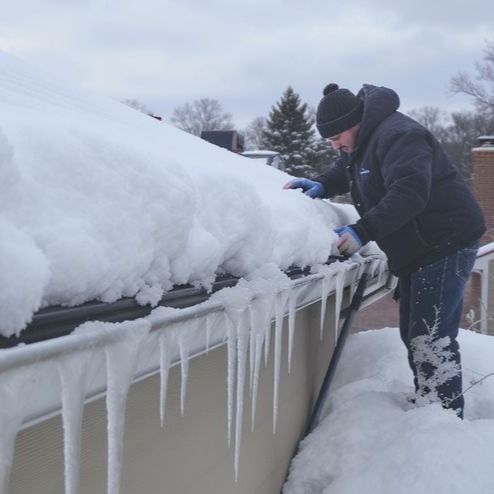
An ice dam is a ridge or buildup of ice that typically forms near the lower edge of a roof.
The process often begins when snow accumulates on the roof. Heat escaping from the living space into the attic can warm portions of the roof deck. Snow sitting over these warmer areas begins to melt.
The resulting water flows downward toward the roof’s edge.
When that water reaches a colder portion of the roof, often near the eaves, it can freeze again. Repeated cycles of melting and refreezing can gradually create a barrier of ice.
This frozen barrier is known as an ice dam.
As more snow melts, water traveling down the roof may become trapped behind the ice. Instead of draining normally into the gutters and away from the home, the water can remain on the roof and potentially work beneath vulnerable roofing materials.
Are Ice Dams a Concern for Virginia Homes?
Yes. Virginia roof ice dams are possible whenever the right weather and building conditions occur.
Virginia’s winter climate can create favorable conditions for repeated freeze-thaw cycles. Temperatures may rise above freezing during the day and drop below freezing at night. Snow may partially melt and then refreeze as temperatures fall.
Northern Virginia homeowners in areas such as Arlington, Falls Church, Alexandria, Fairfax, Stafford, and Fredericksburg should be aware of these changing winter conditions.
Ice dam formation depends on several factors, including:
- Snow accumulation
- Outdoor temperatures
- Roof design
- Attic temperatures
- Insulation levels
- Air leakage from the home
- Attic ventilation
- Sun exposure
- Gutter and drainage conditions
Not every home will develop an ice dam after snowfall. However, understanding the conditions that contribute to roof ice buildup can help homeowners identify potential issues sooner.
What Causes Ice Dams?
Ice dams are often associated with uneven roof temperatures.
Ideally, the roof surface should remain relatively consistent in temperature during cold weather. When certain areas become warmer than others, snow can melt unevenly.
Several conditions may contribute to this problem.
1. Heat Escaping Into the Attic
Warm indoor air naturally rises. If there are gaps around attic access points, plumbing penetrations, recessed fixtures, ducts, or other openings, heated air may enter the attic.
This attic heat loss can warm the roof deck from underneath.
Snow above the warmer roof deck begins melting even when outdoor temperatures remain below freezing.
2. Inadequate Attic Insulation
Attic insulation helps separate the heated living space from the colder attic and roofing system.
Insufficient, uneven, or disturbed insulation may allow excessive heat to reach the underside of the roof.
Proper insulation does more than support energy efficiency. It can also help maintain more consistent roof temperatures during winter.
3. Attic Ventilation Issues
Proper attic ventilation helps regulate temperature and moisture inside the attic.
A balanced ventilation system typically allows outside air to enter through intake vents and warmer air to exit through exhaust vents.
Blocked, improperly designed, or insufficient roof ventilation may contribute to temperature and moisture conditions that make winter roofing problems more likely.
4. Changing Winter Temperatures
Virginia frequently experiences fluctuating winter temperatures.
Snow may melt during a warmer afternoon and freeze again when temperatures fall overnight. Repeated freeze-thaw cycles can gradually increase gutter ice buildup and ice along roof edges.
5. Roof Design and Shaded Areas
Roof valleys, complex rooflines, shaded sections, and areas with limited sunlight can behave differently during winter weather.
Some portions may remain frozen longer than others, creating uneven drainage and localized ice accumulation.
How Can Ice Dams Affect Your Roof?
The main concern with an ice dam is not necessarily the visible ice itself. The greater concern is what happens to water trapped behind it.
A properly functioning roofing system is designed to shed water downward. When an ice dam blocks that path, water can remain on the roof longer than intended.
This may increase the possibility of ice dam roof damage or moisture intrusion.
Water Can Move Beneath Roofing Materials
Standing or backed-up water may find vulnerable areas around shingles, flashing, fasteners, valleys, or roof penetrations.
Once moisture gets beneath the primary roofing surface, it may reach the underlayment or roof decking.
Roof Decking Can Become Wet
Persistent moisture can affect wood roof decking. If wet conditions continue or repeatedly occur, the decking may eventually deteriorate.
This is one reason roof moisture damage should be investigated rather than ignored.
Insulation May Become Damp
Water entering the attic can reach insulation.
Wet insulation may perform less effectively and can create additional moisture concerns inside the attic.
Interior Stains May Appear
An ice dam water damage problem may eventually become visible inside the home.
Homeowners may notice discoloration or water stains on:
- Ceilings
- Exterior walls
- Areas around windows
- Attic framing
- Insulation
However, the visible stain is not always directly below the original point of entry. Water can travel along decking, rafters, framing, or other materials before becoming noticeable indoors.
Warning Signs of an Ice Dam Problem
Homeowners should never climb onto an icy or snow-covered roof to inspect it.
Instead, remain safely on the ground or inside the home and look for visible warning signs.
Potential ice dam warning signs include unusually heavy ice buildup along roof edges, large icicles forming around gutters, frozen gutters, water stains appearing after snow or ice events, damp attic insulation, moisture around exterior walls, and recurring winter leaks.
Icicles alone do not automatically mean that a serious ice dam is present. However, extensive ice accumulation may be worth monitoring, especially when combined with interior moisture or drainage problems.
If you notice signs of a roof leak in winter, a professional roof evaluation can help identify where moisture may be entering.
Can Frozen Gutters Cause Ice Dams?
Frozen gutters and ice dams are related, but they are not exactly the same thing.
An ice dam typically develops when melted snow refreezes near the colder edge of the roofing system. Gutters can also fill with ice when water enters them and freezes.
When gutters contain leaves, branches, shingle granules, or other debris, drainage may already be restricted. During freezing weather, those conditions can make it harder for melting snow and ice to move away from the home.
Keeping gutters and downspouts clear is therefore an important part of general winter roof maintenance.
However, cleaning gutters alone will not necessarily solve an ice dam problem caused by insulation, air leakage, ventilation, or uneven roof temperatures.
How to Help Prevent Ice Dams in Virginia
There is no single solution for every home. Effective ice dam prevention usually involves addressing the conditions that allow excessive heat to reach the roof deck while also maintaining proper drainage.
Improve Attic Insulation
Evaluate whether your attic has adequate and evenly distributed insulation.
Missing or compressed insulation may create warm spots on the roof.
A qualified professional can help determine whether insulation improvements may benefit your home.
Seal Sources of Air Leakage
Air sealing can reduce the amount of warm household air entering the attic.
Potential leakage areas may include:
- Attic access doors
- Plumbing penetrations
- Electrical penetrations
- Ductwork
- Gaps around fixtures
- Wall-to-attic transitions
Reducing unwanted airflow can help maintain more consistent attic temperatures.
Maintain Proper Attic Ventilation
Proper attic ventilation works alongside insulation and air sealing.
Roofing and building professionals can evaluate whether intake and exhaust ventilation are appropriately configured for the home.
Ventilation should be considered as part of the entire attic and roofing system rather than as an isolated component.
Keep Gutters and Downspouts Clear
Clean drainage systems allow melting snow and rainwater to move away from the roof more efficiently.
Before winter, homeowners should consider having gutters checked for:
- Leaves
- Twigs
- Roof granules
- Loose components
- Sagging sections
- Blocked downspouts
Proper drainage can reduce unnecessary gutter ice buildup.
Address Existing Roofing Problems
Loose flashing, missing shingles, damaged roof edges, and other roofing defects can increase vulnerability when water is present.
A professional roof inspection in Virginia before or after severe winter weather can help identify visible roofing conditions that may need attention.
What Should You Do If You Already Have an Ice Dam?
If you see significant ice buildup, avoid climbing onto the roof.
Snow, ice, and freezing temperatures create extremely slippery conditions. Walking on the roof can also damage roofing materials.
Do not attempt to break large amounts of ice away with axes, hammers, shovels, or other sharp tools. These methods can damage shingles, gutters, flashing, and other roof components.
Homeowners should also be cautious about using chemicals or deicing products that are not specifically appropriate for roofing materials.
For substantial ice buildup or suspected leaks, professional ice dam removal or roofing assistance is generally the safer approach.
A roofing professional can evaluate the situation and determine whether the roof shows signs of damage or moisture entry.
Why Ice Dam Prevention Is Better Than Waiting for a Leak
A common mistake is assuming there is no roofing problem because the ceiling looks dry.
Roof leaks do not always become visible immediately.
Moisture may enter beneath shingles and travel along the roof decking before reaching insulation, framing, drywall, or another visible surface.
By the time a ceiling stain appears, moisture may have already traveled some distance.
Preventive maintenance gives homeowners an opportunity to identify potential winter roofing problems before they develop into more extensive repairs.
The Role of Roof Inspections After Winter Weather
After a significant snow, ice, or wind event, homeowners can perform a basic visual check from the ground.
Look for obvious changes such as:
- Missing or displaced shingles
- Damaged gutters
- Loose flashing
- Debris on the roof
- Unusual roof-edge ice
- Interior ceiling stains
- Visible moisture in the attic
If something appears different, a professional roof inspection in Virginia can provide a closer assessment.
Trained roofing professionals can evaluate roofing materials, flashing, penetrations, drainage areas, and other components without requiring homeowners to put themselves at risk.
Ice Dams and Older Virginia Homes
Older homes may deserve additional attention because attic insulation, ventilation, and air sealing standards have changed over time.
Some older properties have been renovated in stages, which can create different insulation levels or ventilation conditions throughout the attic.
Additions can also produce complicated rooflines where snow accumulates differently.
If you own an older Virginia home and experience recurring roof ice buildup or winter moisture problems, evaluating both the roofing system and attic conditions may help identify contributing factors.
Ice Dams vs. Normal Icicles: What’s the Difference?
Icicles form when water drips from an edge and freezes. They can occur without a major roofing problem.
An ice dam, however, is a buildup of ice that restricts the normal downward movement of melting snow or water.
The important issue is whether water is becoming trapped behind the frozen area.
Homeowners should pay particular attention when heavy icicles appear alongside substantial roof-edge ice, frozen gutters, poor drainage, or interior water stains.
Because it can be difficult to determine the full condition from the ground, professional evaluation may be appropriate when signs of moisture are present.
Frequently Asked Questions About Ice Dams in Virginia
Are ice dams common in Virginia?
Ice dams can occur in Virginia when snowfall, freezing temperatures, roof conditions, and heat loss combine. Virginia’s fluctuating winter temperatures can create repeated melting and refreezing cycles, particularly after snow events.
What is the main cause of ice dams?
Ice dams commonly form when heat reaching the roof deck causes snow to melt. The water flows toward colder roof edges and refreezes. Attic heat loss, insulation deficiencies, air leakage, ventilation conditions, and outdoor temperatures can all contribute.
Can ice dams cause roof leaks?
Yes. When an ice dam prevents water from draining normally, water can accumulate behind it and potentially move beneath roofing materials. This may contribute to roof leaks in winter and moisture damage.
Does attic insulation help prevent ice dams?
Proper attic insulation can help reduce unwanted heat transfer from the living area into the attic. Insulation works best when combined with appropriate air sealing and ventilation.
Can clogged gutters make winter roof problems worse?
Clogged gutters can restrict drainage and contribute to standing or freezing water around the roof edge. Keeping gutters and downspouts clear is a useful part of ice dam prevention and seasonal roof maintenance.
Should I remove an ice dam myself?
Homeowners should avoid climbing onto snowy or icy roofs. Aggressive removal with sharp tools can also damage roofing materials. Significant ice accumulation should be evaluated by an appropriately qualified professional.
Are large icicles always a sign of an ice dam?
No. Icicles can form without a major ice dam. However, large or recurring icicles combined with heavy roof-edge ice, frozen gutters, or interior moisture may indicate conditions worth investigating.
What should I do if I notice a ceiling stain after snow?
Document the affected area and look for other visible moisture from a safe location. Avoid climbing onto the roof. A professional inspection can help determine whether the stain is associated with an ice dam, flashing issue, roofing damage, or another moisture source.
Can roof ventilation prevent ice dams?
Proper roof ventilation may help maintain more consistent attic and roof temperatures, but ventilation alone is not always enough. Insulation, air sealing, roof design, and drainage should also be considered.
When should I schedule a winter roof inspection?
Consider an inspection when you notice unexplained leaks, substantial ice accumulation, damaged roofing materials, gutter problems, or changes following severe winter weather. A seasonal inspection before winter can also help identify visible maintenance concerns in advance.
Protect Your Virginia Home Before Winter Roof Problems Grow
Ice dams may not happen after every Virginia snowfall, but homeowners should understand the conditions that cause them.
Proper attic insulation, air sealing, ventilation, drainage, and routine roofing maintenance can all play a role in reducing the risk of ice dams in Virginia. Just as importantly, recognizing warning signs early can help homeowners respond before a small moisture issue becomes a larger roofing concern.
Remember: never climb onto a snowy or icy roof to inspect it yourself. Stay on the ground and leave close-up roof evaluations to trained professionals.
Schedule a Professional Roof Inspection
If you notice roof-edge ice, frozen gutters, ceiling stains, missing shingles, or other signs of winter roof damage, Insured Roofs can help evaluate the condition of your roofing system.
Our team serves homeowners throughout Northern Virginia, including Arlington, Falls Church, Alexandria, Fairfax, Stafford, and Fredericksburg.
Protect what protects your home. Contact Insured Roofs to schedule a professional roof inspection and make sure your roofing system is prepared for Virginia’s changing weather.