Your Roof Replacement Day: A Homeowner’s Guide From Start to Finish
Replacing your roof is a major home improvement project, and it is completely reasonable to wonder what your property will look and sound like once the roofing crew arrives. Understanding what to expect on roof replacement day can help you prepare your home, protect your belongings, and feel more confident about the process.
A professional roof replacement involves much more than simply removing old shingles and installing new ones. The roofing crew may protect areas around your home, remove existing roofing materials, inspect the roof deck, install underlayment and flashing as needed, install the selected roofing material, address ventilation components, and perform a detailed cleanup.
The exact process can vary depending on your roof’s size, pitch, material, weather conditions, accessibility, and what is discovered after the old roofing materials are removed. Still, most homeowners can expect a fairly organized sequence of events.
Here is a closer look at what typically happens before, during, and after roof replacement day.
1. The Roofing Crew Arrives and Prepares the Property
Roof replacement day often begins early so the roofing team can make the most of available daylight and suitable weather conditions.
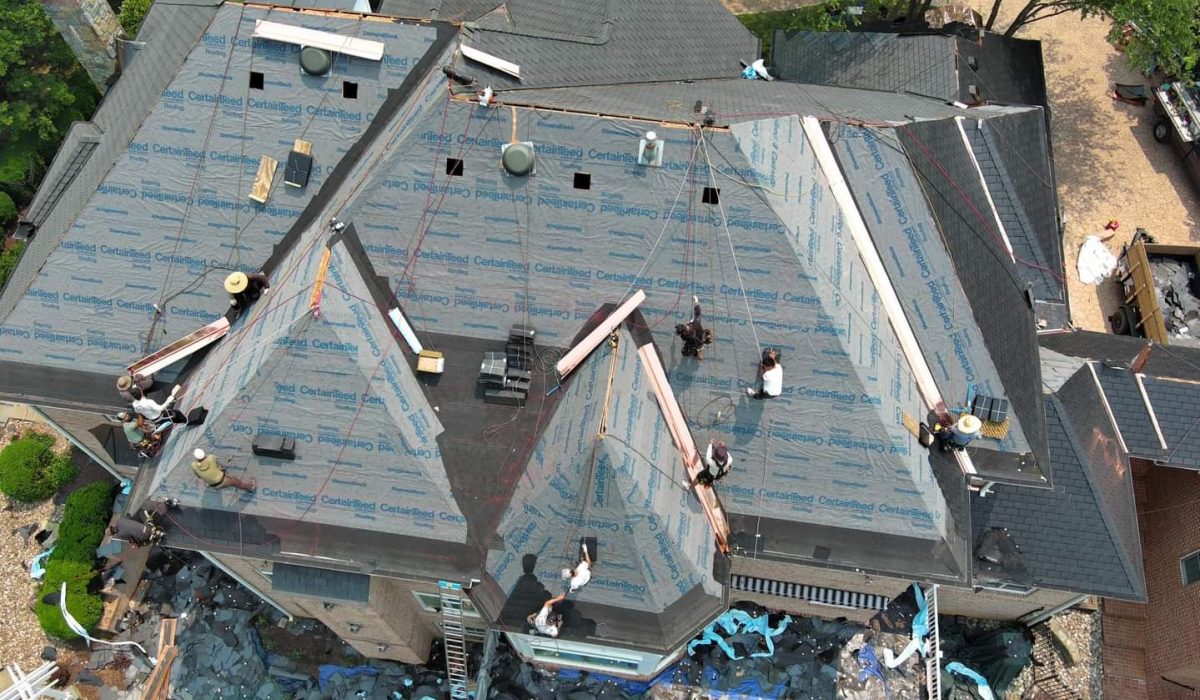
Before removing roofing materials, the crew typically prepares the work area. Depending on the property and project, this may include positioning equipment and materials, setting up ladders, identifying safe work zones, and protecting landscaping or exterior features.
Roof replacement can create falling debris, so keeping the work area organized is an important part of the installation process.
Homeowners should keep children and pets away from active work areas. Vehicles should also be moved when requested by the contractor so roofing materials, equipment, and debris can be handled safely and efficiently.
2. Expect Noise and Vibration Inside the House
One thing homeowners sometimes underestimate is how loud a roof replacement can be.
Removing old roofing materials, walking across the roof, using nail guns, installing shingles, and moving equipment can create considerable noise. You may also notice vibration inside the home.
Before work begins, consider removing or securing fragile items hanging on walls or sitting on shelves, particularly on upper floors. Pictures, mirrors, decorations, and other breakable objects can potentially shift because of vibration.
If you work from home, have small children, or have pets that are sensitive to noise, consider making alternative arrangements during the loudest portions of the project.
3. Existing Roofing Materials Are Removed
Once the property is prepared, the crew can begin removing the existing roofing materials.
For an asphalt shingle roof replacement, this generally involves removing old shingles and other materials as required to expose the underlying roof system.
Removing the existing material gives the roofing contractor an opportunity to examine components that may not have been visible during an exterior inspection.
This stage can temporarily make the property look messy, but professional crews typically manage debris throughout the project rather than simply leaving everything until the end.
4. The Roof Deck Is Inspected
After the old roofing materials are removed, one of the most important stages begins: the roof decking inspection.
The decking forms the structural surface beneath the roofing system. Once exposed, the roofing team can look for visible deterioration or damaged areas that may need attention before the new roof covering is installed.
This is also why the final scope of a roof replacement can sometimes change after tear-off. Certain conditions cannot always be confirmed until the existing roofing materials have been removed.
If deteriorated decking or another unexpected condition is found, your roofing contractor should explain what was discovered and what work is recommended before proceeding with additional work outside the agreed scope.
5. Underlayment and Water-Shedding Components Are Installed
A roofing system contains several layers, and the shingles are only the most visible part.
Once the roof deck is ready, the installation team typically installs the appropriate roof underlayment and other water-management components required for the specific roofing system and project.
Underlayment creates an additional protective layer between the roof deck and the finished roof covering.
Depending on the roof design and project specifications, additional protection may be used in vulnerable areas such as valleys, penetrations, and roof edges.
These components matter because a reliable roof depends on the entire roofing assembly—not just the shingles you can see from the ground.
6. Flashing Is Evaluated and Addressed
Roof flashing is used around areas where water needs to be directed away from joints, transitions, and penetrations.
Common locations include:
- Chimneys
- Roof-to-wall transitions
- Plumbing vents
- Valleys
- Skylights
- Other roof penetrations
During a professional roof replacement, existing flashing conditions should be evaluated and appropriate flashing details addressed according to the project requirements.
Proper installation in these areas is important because penetrations and transitions are common places for water intrusion to develop when roofing components are damaged, deteriorated, or incorrectly installed.
7. The New Roofing Material Is Installed
Now comes the part homeowners are usually most excited to see: the new roof installation.
For an asphalt shingle roof, shingles are installed according to the selected roofing system and applicable installation requirements. Crews generally work systematically across sections of the roof while maintaining proper alignment and fastening.
Depending on the project, the installation may also involve components such as starter materials, ridge or hip shingles, flashing, vents, and other accessories.
The exact sequence will vary according to the roof design and roofing material.
This stage often produces the biggest visual transformation. By the end of installation, the home can have a noticeably refreshed exterior appearance.
8. Roof Ventilation Components May Be Addressed
A roof is part of a larger system that includes the attic and ventilation.
During the roof replacement process, existing ventilation conditions may be reviewed and relevant roof ventilation components addressed as part of the agreed scope.
Proper attic ventilation can help manage heat and moisture within the attic space. The appropriate ventilation approach depends on the home’s construction, roof design, intake and exhaust configuration, and other building-specific factors.
Homeowners should ask their roofing contractor what ventilation components are included in their roof replacement proposal rather than assuming every roof requires the same setup.
9. Cleanup Happens Throughout the Project
Roof replacement naturally creates debris. Old shingles, nails, packaging, underlayment scraps, and other materials must be removed from the property.
A professional roof replacement cleanup should be an active part of the project rather than an afterthought.
Crews may use tarps or other protective measures where appropriate and collect roofing debris as work progresses. At the end of the project, the property should receive a more thorough cleanup.
Homeowners can expect roofing materials and jobsite debris to be collected and removed according to the contractor’s project procedures.
10. A Final Inspection Is Performed
After installation is substantially complete, the contractor should perform a final review of the work.
The exact roof replacement inspection procedure varies by company and project, but the goal is to confirm that the agreed work has been completed and that the jobsite is ready to be turned back over to the homeowner.
This is also a good time for homeowners to ask questions about their new roofing system, maintenance considerations, documentation, and warranty information that applies to the project.
At Insured Roofs, clear documentation is part of the company’s broader approach to helping property owners understand roofing and exterior conditions.
How Long Does Roof Replacement Day Take?
There is no single timeline that applies to every roof.
Some straightforward residential roof replacements may be completed relatively quickly, while larger or more complex projects can require additional time.
Factors that can affect the roof replacement timeline include:
- Roof size
- Roof pitch and complexity
- Number of existing roofing layers
- Roofing material
- Property accessibility
- Decking conditions discovered after tear-off
- Flashing and penetration details
- Crew size
- Weather conditions
- Additional repairs included in the project
Your roofing contractor should provide an estimated project schedule before work begins, but homeowners should understand that unexpected conditions or weather can affect that estimate.
Quality installation should take priority over rushing to meet an arbitrary timeline.
How Should Homeowners Prepare for Roof Replacement Day?
A little preparation can make roof installation day much easier.
Before the roofing crew arrives, homeowners should consider moving vehicles away from the immediate work area, securing fragile wall decorations, protecting valuable items in the attic when appropriate, keeping pets indoors or elsewhere, and making sure children understand that the outdoor work area is off-limits.
You may also want to mow the lawn shortly before the project. A shorter lawn can make post-project cleanup and the identification of stray debris easier.
If you have patio furniture, grills, decorations, planters, or other movable items close to the house, ask your contractor whether they should be relocated.
Most importantly, discuss project-specific preparation requirements with your roofing contractor beforehand. Every home and jobsite is different.
Should You Stay Home During a Roof Replacement?
You usually do not need to supervise the roofing crew throughout the project.
Whether you choose to remain home depends largely on your comfort with noise and vibration. Working from home during roof replacement can be challenging because tear-off and installation can be loud.
Pets may also become stressed by unfamiliar people, equipment, and repeated construction noise.
If you leave, make sure the contractor has a reliable way to contact you if an unexpected condition is discovered or a project decision is required.
What If the Crew Finds Unexpected Damage?
Roofing professionals can evaluate many visible conditions before replacement begins, but some parts of the roof system remain concealed until the existing materials are removed.
For example, damaged or deteriorated decking may only become fully visible during tear-off.
If an unexpected condition is discovered, a professional contractor should document it, explain why it matters, and discuss any recommended change in work with you.
Do not hesitate to ask for photos or a clear explanation. Homeowners should understand what is being recommended before approving additional work.
This emphasis on clear inspections and construction documentation aligns with Insured Roofs’ positioning around technical documentation and homeowner education.
What Happens After Your New Roof Is Installed?
Once your professional roof replacement is complete, ask your contractor for applicable project documentation.
Depending on the roofing system and agreement, this may include warranty information, product information, final project documents, photographs, maintenance guidance, and other relevant records.
Keep these documents somewhere safe. They may be useful for future maintenance, warranty questions, renovations, or when selling the property.
You should also learn the basic warning signs that could justify a professional inspection in the future, such as displaced roofing materials, visible exterior changes, unusual debris around the property, or signs of unwanted moisture indoors.
Routine awareness can help homeowners identify potential issues before they become larger problems.
Why Choosing the Right Roofing Contractor Matters
A roof replacement is more than a cosmetic improvement. It involves multiple components that must work together as a roofing system.
That makes contractor selection an important part of the process.
When evaluating a roof replacement contractor, homeowners should consider licensing and insurance, roofing experience, communication, project documentation, material knowledge, cleanup procedures, warranties, and the contractor’s ability to clearly explain the scope of work.
Insured Roofs’ brand standards emphasize licensed and insured service, clear property documentation, roofing expertise, and homeowner guidance across the DC, Maryland, and Virginia region.
A trustworthy contractor should help you understand what will happen before the project begins so roof replacement day does not feel like a mystery.
Frequently Asked Questions About Roof Replacement Day
What should I expect on roof replacement day?
Expect an active construction site with roofing crews, equipment, noise, vibration, and debris management. The typical process includes property preparation, removal of existing roofing materials, inspection of the exposed roof deck, installation of roofing-system components, installation of the new roof covering, cleanup, and a final project review.
Do I need to leave my house during a roof replacement?
Not necessarily. Many homeowners remain home, but roof replacement can be extremely noisy. If you work remotely, have young children, or have noise-sensitive pets, spending part of the day elsewhere may be more comfortable.
How long does a roof replacement take?
The timeline depends on the roof’s size, complexity, material, accessibility, weather, crew size, and conditions discovered during tear-off. Ask your contractor for a project-specific estimate before installation begins.
Should I move my car before the roofing crew arrives?
If your contractor requests it, yes. Moving vehicles away from the immediate work area can provide room for equipment and material handling while reducing exposure to falling debris.
Will my house shake during roof replacement?
You may notice vibration while workers remove roofing materials, walk on the roof, and install the new roofing system. Securing fragile decorations, mirrors, and other breakable items before work begins is a sensible precaution.
What happens if damaged roof decking is discovered?
The contractor should document the condition and explain the recommended repair or replacement. Because decking is concealed beneath roofing materials, some deterioration may not become apparent until tear-off.
Is cleanup included after roof replacement?
Cleanup is typically part of a professional roof replacement project, but the exact procedures should be confirmed in your contract. Ask your contractor beforehand how debris, old roofing materials, and nails will be managed.
Can weather delay roof replacement?
Yes. Rain, wind, extreme temperatures, or other unsuitable conditions can affect roofing work. A responsible contractor should consider weather conditions when scheduling and managing the project.
Should I inspect the roof myself afterward?
Homeowners should avoid climbing onto the roof simply to inspect the finished project. Ask your roofing contractor to explain the completed work and provide appropriate documentation or photos. Visual observations can also be made safely from the ground.
Ready for Your Roof Replacement?
Knowing what to expect on roof replacement day can make the entire experience easier. From preparing your property and removing old roofing materials to inspecting the decking, installing the new roofing system, and completing the final cleanup, each stage plays a role in a successful project.
If your roof is aging, showing visible signs of wear, or you are considering a roof replacement, Insured Roofs can evaluate the roof’s condition and explain the construction-related findings and available repair or replacement options.
Contact Insured Roofs to schedule a professional roof inspection and get clear information about the next steps for your home.
Insured Roofs is a roofing and exterior restoration contractor. We provide inspections, construction-related documentation, photos, measurements, repair recommendations, and scope information. We do not act as a public adjuster and do not determine, negotiate, or guarantee insurance coverage. Coverage and claim decisions are made by the insurance carrier.